Your Neighborhood Gecko

Because of their solo nature, it’s not likely to spot a group of geckos in the wild. However, one species of gecko has adapted to a more urban lifestyle: the Mediterranean Gecko. Better known as the Common House Gecko, these creatures originated between the Northern parts of Africa and Southern Europe.

gecko-2656812_1280

First introduced to other warm countries, the Mediterranean Gecko made its way to Florida and has been leaving a trail ever since. If you live in an urbanized part of the Southeastern United States, there’s a good chance you have a few house guests.

Don’t be alarmed yet, though. These lizards are ferocious insect hunters and are great for keeping down the insect population outside your home. The best way to spot them is at night on a lit porch where insects tend to collect, however on occasion, you may be able to see some wandering about throughout the day.  These geckos tend to be skittish and are likely to run from human presence, but if you happen to get close to one, their docile nature presents no cause for danger.

While there is a wide range of color morphs for Mediterranean Geckos, a few identifying characteristics remain the same. If you feel you have a few new outdoor companions, the identification guide below might prove useful:

Screen Shot 2018-06-19 at 4.48.59 PM

If you answered yes to all of these questions, then you’ve got yourself a fierce home defender! They may not be the best at insuring your cars, but they will definitely give bugs a run for their money.


Stuck Like Glue

I’ll be the first to admit, whenever I saw a butterfly with a broken wing, I was the kid to create a terrarium (not very decent, mind you) and stick him/her in it hoping it would grow back… and voila, the insect would be healed! Unfortunately, the outcome was always the same: they died. The sad reality is butterflies finish growing after their second stage of life, and without their wings, they don’t have the best mobility.

It wasn’t until I was bouncing around youtube one night when I found a video of a man actually repairing a wing for a butterfly with contact cement. Granted, the name gives the product a harsher sound than it is, as it is just a form of contact adhesive.

Without their in-tact wings, these beautiful insects are rendered flightless and will spend the rest of their days crawling around the ground. Without any intervention, this leaves them easy prey for birds, reptiles, bored toddlers, you name it. Luckily, there’s a solution, and if you’ve got the patience, the steps are quite simple.

If you are interested, the Live Monarch Foundation has a step by step guide to turning the quality of life around for these injured critters. Even if you don’t happen to find yourself in a situation like this, I find it worth the watch, because who doesn’t want to be an expert at butterfly wing repair?


Stay adventurous,
Olivia Grace

Debunking the Betta

Among the top breeds of fish to own, Bettas are the most often maltreated and neglected. Sold in containers merely double there size, buyers often believe the fish are able to thrive in tight conditions. Like any other fish type, tight surroundings leads to increased stress levels, and as a result, the fish become more susceptible to illness.

Housing

The best way to avoid bringing stress to your aquatic companion is to provide adequate swimming room with plenty of hides for stimulation. As a common rule, at MINIMUM, for every inch of fish, you should have a gallon of tank-space for the environment.

Other important factors to remember are that Bettas are tropical animals and flourish in water temperatures ranging from 78-80 degrees F. When water temperatures drop and remain below 74 degrees F, the fish can grow lethargic and again take on added stress levels.

Decorations

There are pros and cons to both fake-planted aquariums and aquascapes. Perks of having a non-planted aquarium include a low level of algae, however, the plants chosen need to be of a silk variety, as the harsh plastic of most aquarium decorations can shred the delicate fins of a Betta fish.

While providing a more natural living space, planted aquariums can lead to fungal infections if the tank does not have a decent filtration system and excess food/dead plant material is left to rot.

The tank style truly depends on the amount of time and money the owner is willing to put in to ensure a clean and sustainable environment.

Diet

Due to their carnivorous nature, Bettas require a wide-range of protein in their diet. Most pellet mixes will be sufficient, though it is more than acceptable to supplement bloodworms and freeze-dried krill into their diet from time to time.

Tankmates

A common misconception is that Betta fish have to live in isolation. While males need to be isolated from other males of the breed, sorority tanks often function quite successfully after an initial hierarchy is sorted out.

Bottom feeders such as snails, loaches, plecos, and African dwarf frogs, all make good companions as well due to their docile nature and tendency to stay out of the Betta’s way.

betta-1305203_1280

As always, it is important to make sure you have the money and time to dedicate to these beautiful creatures before you bring one home. Though they may be small, these fish do require time and attention to ensure they are living a healthy and proper lifestyle.


Stay adventurous,

Olivia

Metabolic Bone Disease: What to Do

Muscle spasms, loss of appetite, lethargy—all are common symptoms of Metabolic Bone Disease, also known as MBD. The sad reality of purchasing reptiles in pet stores who don’t hire specialists is often the UVB lighting is not replaced as often as it should be. Though UVB bulbs and light strips may still emit a light frequency, the potency of the fixture decreases over time, limiting the actual amount of UVB exposure the animal is receiving.

What to Do if Your Animal Shows Symptoms

As convenient as it would be to simply bring your reptile to the vet, often buyers are placed in a state of emergency when the new companion they bring home goes into severe spasms. This is a severe state of MTB, and while the animal IS capable of making a recovery, the likelier alternative is the animal will pass.

While under UVB lighting, the animal can be submerged in an electrolyte bath—X part clear-infant Pedialyte to X part water is sufficient. If the animal shows improvement between spasms, a meat-heavy baby food, for example, pureed chicken can be placed on the tongue of the reptile.

Opening the mouth of your reptile can be tricky, especially if they are in a slightly vegetative state. The safest way is to take a small skewer with a flattened end and gently pry open the side of the mouth. From here, the baby food can be glided across the tongue with a Q-tip, dull toothpick, etc.

For less severe symptoms, such as lethargy and loss of appetite, the best bet is to take your reptile to an exotic-trained veterinarian that can identify the source of the issue. As mentioned earlier, it is best to run through the components of your enclosure to consider if MTB is a possibility, or if there could be other issues brewing. UVB strips are excellent for target large areas of a terrarium, however, as their potency fades over time, they need to be switched out. As an average, every six months is reasonable for a strip or bulb to be replaced.

When Purchasing an Animal

Everyone tends to get caught up in the excitement of getting a new animal, and often overlook how the animal is acting, the housing environment, or diet provided.

Before ever purchasing a new companion, it is crucial to be an observer to the creature in its environment. Take note of the diet currently being fed—is it nourishing, is there a lack of nutrients? Notice the skin of the reptile—are the scales in good condition? Look at the eyes—are they reflective and clear, are they dull and cloudy? Most importantly, notice the interaction of the animal with its surroundings and be sure it does not appear lethargic. A new animal should be just as curious as you are to it. If the animal requires special lighting, don’t be afraid to ask an employee the last time the UVB bulb was switched.

Always be sure to hold special lighting as a priority for new companion animals. Unlike housing decorations, a lack of this could prove detrimental to the health and the two should be considered inseparable at the register—if you buy one, you buy the other.

IMG_1251

Olive, Chinese Crested Water Dragon

Before you purchase any animal, be sure to do your research, not only the habitat and diet but of the potential ailments as well. Above all else, don’t be afraid to question the health of the animals being purchased, as this could better prepare you for the road ahead for you and your new companion.

Stay adventurous,

Olivia Grace

Back in Business!

Over the summer, I went on tour with a traveling Drum and Bugle Corps, which took me away from the blogging world for a while. Needless to say, I’m back, and getting to see the rich wildlife we have across this country has me fueled more than ever! Who knew dragonflies could come in so many different shapes and sizes?

Some of the creatures I met were on the larger scale, but the vast majority were on the smaller side.

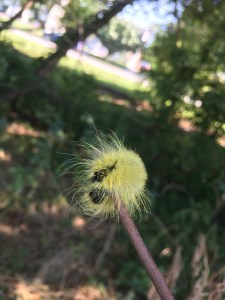
I found this American Dagger Moth caterpillar on a backpack in Mt. Carmel, Pennsylvania. Though the protruding hairs from the green ball of fuzz can be alarming, you have no need to fear of it stinging you. Do take notice, however, that I have him on a stick. While they don’t sting, their hollow locks can break off when touching your skin and will release a nasty toxin.IMG_0850

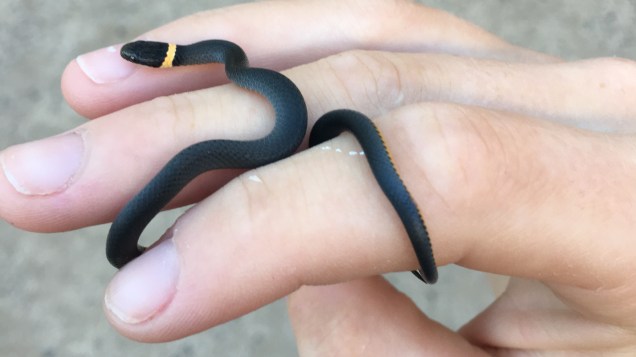
Oddly enough, at the same housing site, I made another companion–a ringneck snake! Ever since I read about these beauties in a herpetology textbook, I’ve been dying to meet one up close, and I must say, I was not disappointed. Spanning up to 15 inches long, Ringnecks carry a docile temperament and make the perfect companions–be it short term or long term.

Exploring the different creatures across the country was definitely one of my favorite aspects of the summer, and I can’t wait to share with you countless of others. Until we meet again, always remember: Whether near or far, learning about nature’s creations will always link back to where you are.

IMG_0943


Hopping to the Spotlight

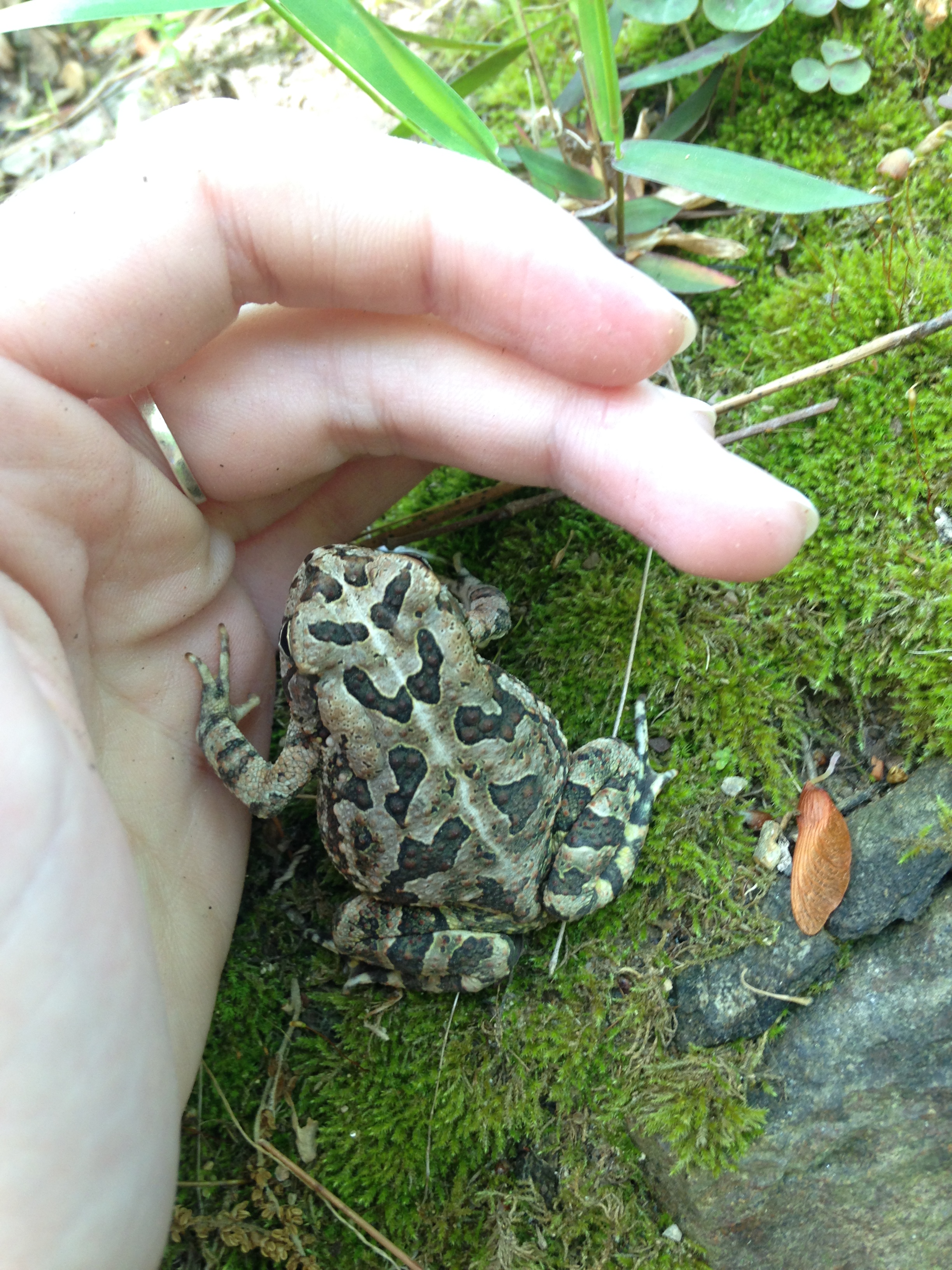
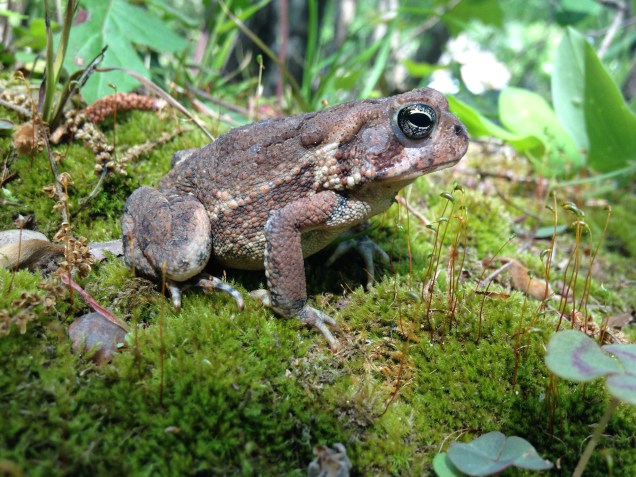
One of my favorite things about hiking is getting to interact with the beautiful creatures around you. Around this time last Spring I was meandering through Chewacla—a park in Auburn, Alabama—when I came across these social fellows.

IMG_7012.JPG

IMG_7016.JPG

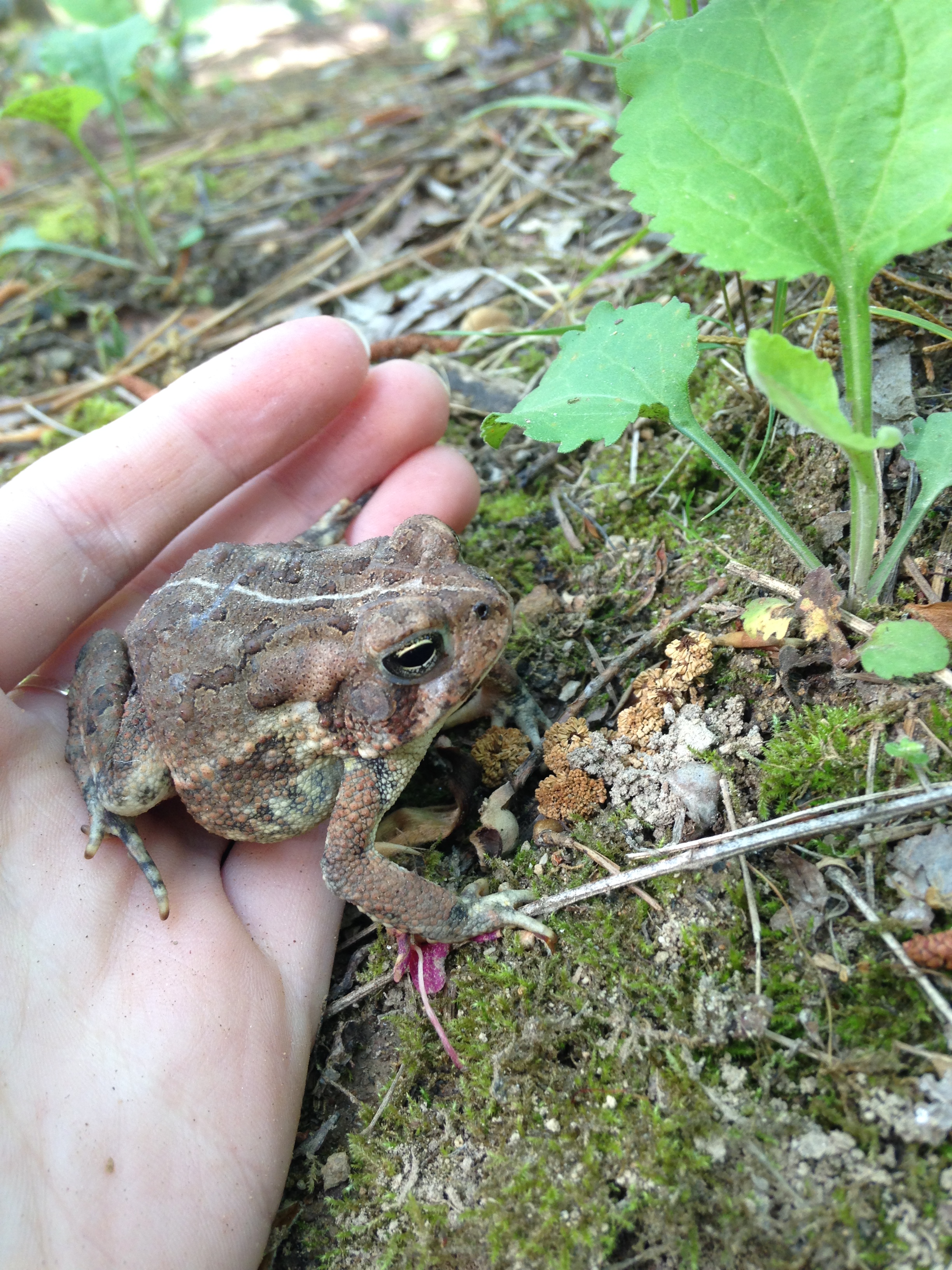
Both Fowler’s toads, the toad pictured on top held a darker pigmentation, causing him to beautifully stand out against the moss.

IMG_7021.JPG

These kinds of toads can easily be identified in the wild not only due to their markings but because of their unique song and chirp.

A native to North America, these animals spend a majority of their life on land. However, at the time of mating, they will return to shallow waters to find a mate and obtain an area to lay eggs.

These two were quite social when being handled, and had no problem striking a pose for the camera.

I plan to hike the same trail on Friday, and, needless to say,  I’m feeling froggy.

A Helping Hand

IMG_5059.JPG

Pictured Above: Fred, A Sugar Glider From a Past Clinic

“I have no fear of losing my life—if I have to save a koala or a crocodile or a kangaroo or a snake, mate, I will save it.” -Steve Irwin, Wildlife Conservationist

I grew up watching Irwin as a kid and was fascinated by his devotion to the wildlife around him. His desire to help never faltered despite the situation presented. Sure, there were moments where he was fearful, but his driven passion helped override his apprehension.

I knew animal medicine and rehabilitation was the route I wanted to take when I found my Eastern box turtle, Eartle. A little over the size of a quarter, he was dropped by a bird and suffered a hairline cracked shell. After movement made a slight improvement within a few weeks, I looked at the percentages of survival with young box turtles: mortality rate rests among 95%.  I took one look at the little guy and how hard he was struggling to eat his cucumber slice and knew he was going to be my long-term companion.

More recently, I was walking outside my complex when I noticed a female sparrow convulsing. Her leg was awkwardly bent inward, forcing the bird to drag herself when trying to move. There was no hesitation. I asked my boyfriend to go inside and grab the softest kitchen towels I had. With a scooping motion, I picked up the sparrow and brought her inside to be placed on a heating pad. She laid there, allowing me to stroke her head with her shaking decreasing. Together, my boyfriend and I pondered what to call her, but I knew eventually she would be released. To avoid getting attached, he suggested we just call her Bird. I reminded him she was indeed a lady.

Miss Bird it was.

Over the weekend she remained on low heat, as well as was transferred to a larger enclosure. Around two days after finding her, with a belly full of sunflower seeds, Miss Bird flew on home.

There was no tangible reward for helping that sweet bird, as there isn’t for helping most wildlife. What you do receive, however, is what I felt that day—a deep and joyous satisfaction knowing she was pruning in a tree somewhere, spending the night with her own kind versus lying on the harsh cement.

I guess you could say stories like Eartle and Miss Bird are what my blog is about. I’ve never been one to walk away from an animal in need, and I hope that by documenting my path at least one more person will realize the importance and beauty of the creatures around us.

There’s a lot out there to learn, and I know I am just at the beginning of my journey. What I can be confident about, though, is it only takes a little compassion to get started.