Trees, Geese, and Beef: The Journey to Regenerative Agriculture

How a small farm in northern Vermont is doing its part in saving the world.
Gold Shaw Farm is a small-scale beef, poultry and tree operation located on 150-achre’s of land in the rural northern town of Peachum, Vermont. Founded by couple Morgan Gold and Allison Ebrahimi Gold in 2016, this farm has continuously aimed to operate under the main principles of regenerative agriculture.

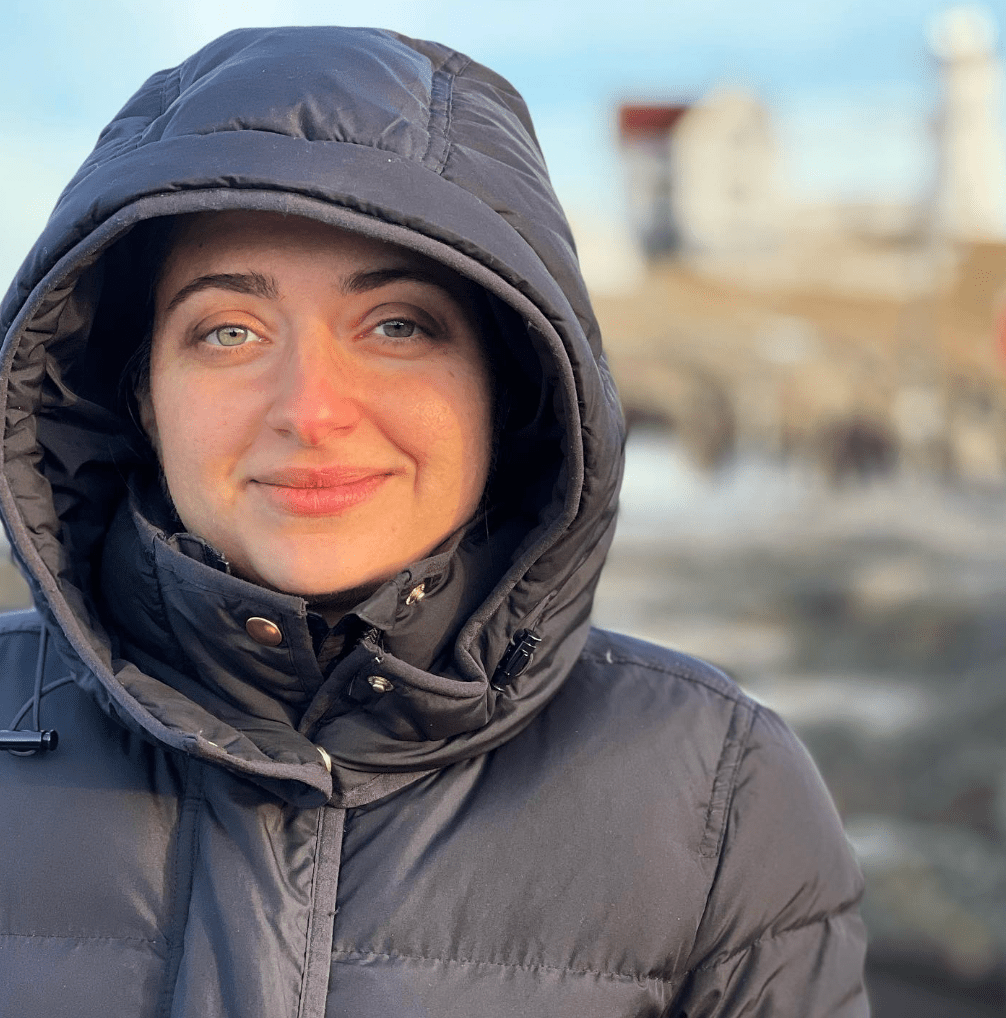
Morgan Gold
Allison Ebrahimi Gold

No-Till Farming and Cover Crops for Soil Health and Sustainability

Regenerative agriculture is a sustainable farming strategy focusing on the preservation and cultivation of native biodiversity both above and below ground. The foundation of regenerative agriculture can be boiled down to the basic idea that if you take care of something, it will last longer. In this case, the stakes are a bit more severe.

Depending on the environment, the practices of regenerative agriculture can differ, but the main goal of all strategies is to increase the microbial biodiversity in the soil. In terms of current agricultural practices in the United States, the utilization of monocultures, organic or not, have negative impacts on the soils microbial diversity.

In commercial farming operations, monocultures, or the mass seeding and farming of one crop, leads to a decrease in the diversity of native plants, soil, and microbes. In conjunction with monocultures, many commercial farms often will till their soil. Tilling is a process of mechanically turning over the top layers of soil to prep for crop seeding. Several studies have shown that the constant tillage of soil leads to the destruction and death of microbes which leads to a decrease in organic nutrients useful for the plants, resulting in the need for high nutrient fertilizers. Along with a decrease in nutrients, tilling eventually leads to soil erosion. Soil erosion will then result in an increase in chemical runoff into ground water due to the increased usage of fertilizers, which then can further affect the surrounding ecosystem and environment.

Sourced from Kiss the Ground.
Sourced from the University of Illinois, Extension.

In order to avoid the negative impacts tilling has on the environment, Gold along with several farmers around the world have started to revert back to no-till farming. No-till farming is as easy as it sounds, not tilling the top portion of the soil before seeding crops. This preserves and employs helpful organisms within the soil, allowing for proper nutrient cycling. Along with no-till farming, the use of cover crops can increase the nutrient and diversity of the soil. Cover crops are companion plants, used to help increase the quality of soil by for the main crop by breaking up and aerating the soil. In conjunction with organic and natural fertilizers like mulch, no-till farming is a great way to maintain or improve the quality of soil.

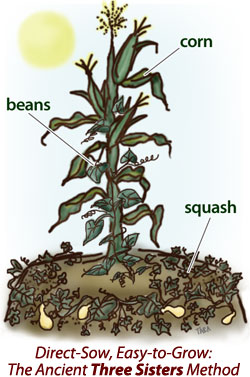
You can practice this type of farming in your own home as well! For those who have outdoor gardens, instead of planting your crops grouped up together, consider alternative planting strategies, and example being the Three Sisters garden. Three Sisters gardens were originally developed by Native Americans. The three crops that this technique is built off of includes corn, beans, and squash. How and when each crop is planted aids in the others crops survival while simultaneously increasing the nutrients available within the soil.


A Solution to Overgrazing and Desertification in the United States

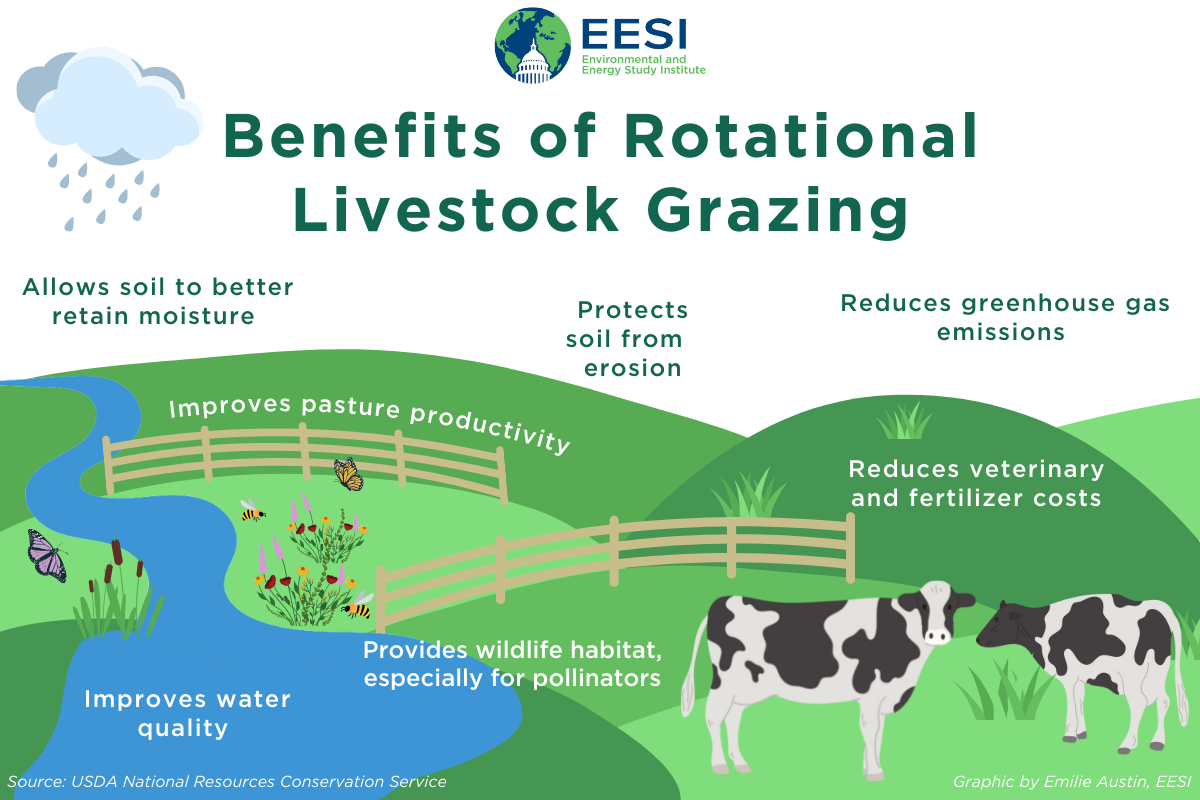
Other regenerative practices include Regenerative Grazing. Currently in the United States, many commercial ranches and farms raise cattle, and/or other ruminates like sheep or goats, in open fields where they are allowed to graze freely. In doing so, these farms actively allow their cattle to overgraze fields of grass, slowly deteriorating the soil causing desertification.
Sourced from USDA National Resources Conservation Service.

Overgrazing occurs when cattle are allowed to continuously graze on a single patch of land. When this happens, the grass cannot grow efficiently resulting in less growth overall causing the cows to graze more since less grass is available. Eventually, this negative feedback loop results in extremely dry and eroded soil causing desertification.

In order to counteract overgrazing and desertification, farmers like Gold have started to utilize old school strategies like intensive rotational grazing. Rotational grazing reflects ruminates natural grazing behavior, where cows would remain in herds and graze in small areas to remain safe. In utilizing this behavior as a farming technique, Gold began to isolate his Scottish highlanders to one paddock where their grazing is concentrated. While grazing, the cattle will also start to fertilize the soil with their manure, aiding in future grass growth. After the grass in one paddock gets eaten down, Gold then moves his cattle to the next adjacent paddock where the process begins again. Once the herd moves from one paddock to the next, they won’t visit the old paddock until grass has been able to fully grow and accumulate high amounts of biomass, usually a cycle of about 60 days.

"I try my best to mimic nature -" Gold says.
Cattle vs. Plant Earth, Gold Shaw Farm, YouTube

The Integration of Trees and Shrubs into Regenerative Agriculture Practices

One last pillar of regenerative agriculture includes Agro-Forestry. Agro-forestry is a set of agricultural practices that integrate food producing trees and shrubs into traditional farming systems. In this strategy, particular attention is given to native plant diversity and ecosystem interactions. There are several strategies to agro-forestry, with the most common one being food forests. Here each layer of the seven layer plant system has some contribution to the health of the whole system.

Another example of agro-forestry are permaculture orchards. A permaculture orchard is basically an ecologically conscious and strategically planted food forest, where trees are planted in plantation like fashion. The defining features of a permaculture orchard begin with the word Permaculture. Permaculture, coined by Bill Mollison, is a the act of consciously designing, building, and maintaining an agriculturally productive ecosystem, or creating a permanent agriculture. Therefore, permaculture orchards are not only for agricultural use, but are designed to serve several functions within the native ecosystem.

A Duck Farmers Permaculture Orchard – Gold Shaw Farm, YouTube

Within his 150-arche farm, Gold has been able to create his very own permaculture orchard. Since the beginning of Gold Shaw Farm, Gold has been cultivating native tree and shrub species from Northern Vermont, including hazelnuts, elderberries, mulberries, black locus, and chestnut trees.

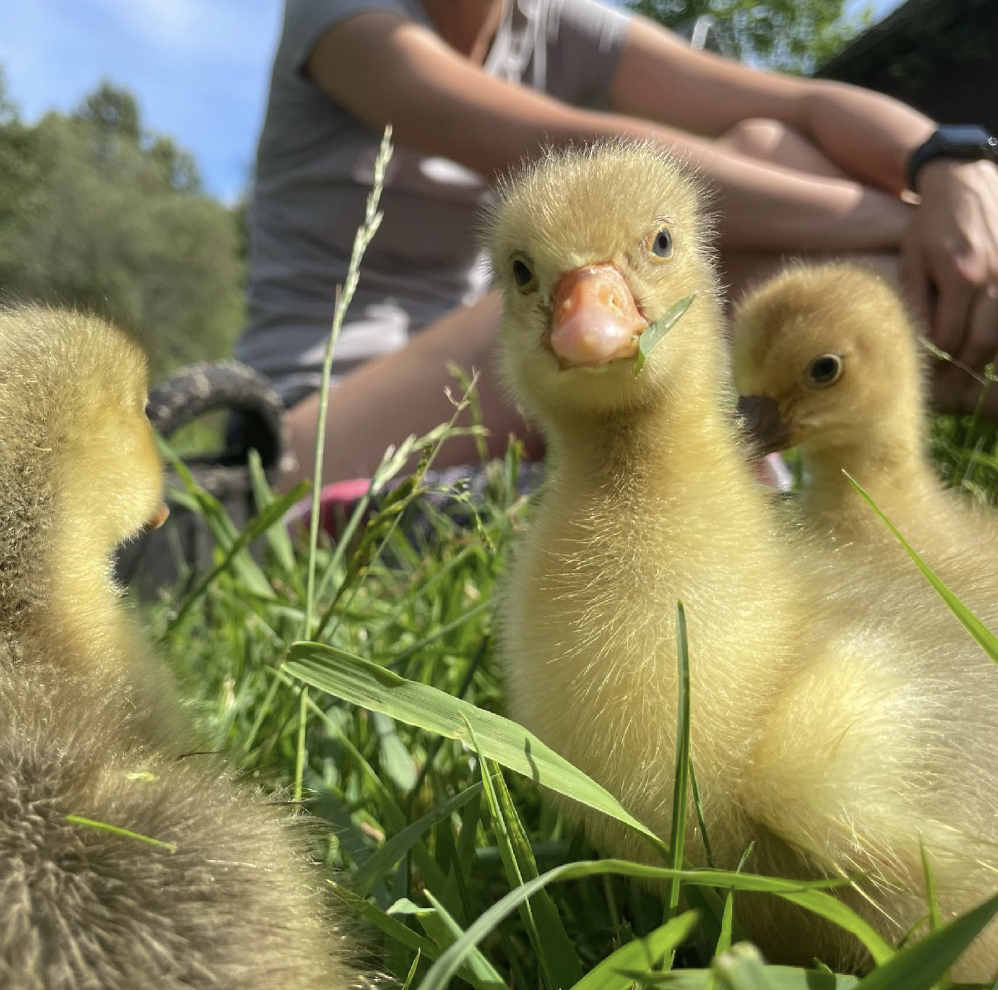
Overall, the use of rotational grazing and permaculture orchards can combine to create another regenerative agricultural practice, known as silvopasture. In silvopastures, there is a deliberate interaction with tree and livestock operations, where rotational grazing is used as the key to managing wooded or pastured orchards. Here, as the cows graze they are covered and cooled by shade the trees provide. The trees in turn are protected from any invasive plants or weeds while also being provided nutrients from manure fertilizing the soil. In addition to livestock and orchards, silvopasturing can involve other farm animals like chicken, ducks, and geese, which help to spread manure and eat excess bug larvae left over.

An example of a silvopastsure; sourced from the USDA.

At the end of the day, regenerative agriculture is aiming to save the world by reducing CO2 emissions, decreasing deforestation, improving the quality of soil and increasing the nutrients within the soil. Through entertaining and educational videos via YouTube, TikTok, Facebook, and Instagram, Morgan Gold shares his life on the farm. By utilizing regenerative agricultural techniques such as no-till farming, intensive rotational grazing, permaculture orchards, and silvopastures, Gold Shaw Farm is doing its past in saving the world.

Touring a Permaculture Orchard in Vermont – Gold Shaw Farm, YouTube

You can follow the adventures of Morgan and Allison on instagram @goldshawfarm.


References

Díaz, S., Settele, J., Brondízio, E. S., Ngo, H. T., Guèze, M., Agard, J., … & Sharma, N. (2019). Summary for policymakers of the global assessment report on biodiversity and ecosystem services of the Intergovernmental Science-Policy Platform on Biodiversity and Ecosystem Services. Retrieved from https://www.scienceforbiodiversity.org/assets/docs/ipbes_global_assessment_report_summary_for_policymakers_en.pdf

Natural Resources Defense Council. (n.d.). Regenerative agriculture: 10 practices to regenerate soil and increase farm productivity. Retrieved from https://www.nrdc.org/stories/regenerative-agriculture-10

Permaculture News. (n.d.). What is permaculture? Retrieved from https://www.permaculturenews.org/what-is-permaculture/#:~:text=Permaculture%20(the%20word%2C%20coined%20by,and%20resilience%20of%20natural%20ecosystems.

Smith, P., Martino, D., Cai, Z., Gwary, D., Janzen, H., Kumar, P., … & McCarl, B. (2007). Agriculture. In Climate change 2007: Mitigation. Contribution of Working Group III to the Fourth Assessment Report of the Intergovernmental Panel on Climate Change (pp. 497-540). Cambridge University Press.

USDA National Agroforestry Center. (n.d.). Silvopasture. Retrieved from https://www.fs.usda.gov/nac/practices/silvopasture.php

Exploring Biodiversity

The value of biodiversity is that it makes our ecosystems more resilient, which is a prerequisite for stable societies; its wanton destruction is akin to setting fire to our lifeboat.

Johan Rockstrom

What is biodiversity?

The term biodiversity refers to the multitude of living species on Earth and their incredible variations. There are no exclusions for organisms when describing total global biodiversity, meaning organisms from all three domains of life are included. These domains are referred to as Bacteria, Archaea, and Eukarya. The relationships of these groups can be seen in the image below.

The three domains of life: Eukarya, Archaea, and Bacteria.

Members of Eukarya include eukaryotic organisms such as plants, animals, protists, and fungi. Archaea includes organisms such as retroviruses, and bacteria includes microbes such as E. Coli (a common cause of food poisoning). Archaea are unicellular organisms that lack a true nucleus (organelle that contains the genetic information of an individual), which distinguishes them from their nucleated counterparts Eukarya and Bacteria. Despite sharing similarities when compared to Archaea, members of Eukarya differ from Bacteria as these organisms are multicellular and have their organelles (functional parts of the cell) surrounded in individual membranes. Members of Archaea are commonly represented by those organisms that live in extreme conditions such as in the Dead Sea (‘salt-loving’ halophiles) or in volcanoes (‘heat-loving’ thermophiles).

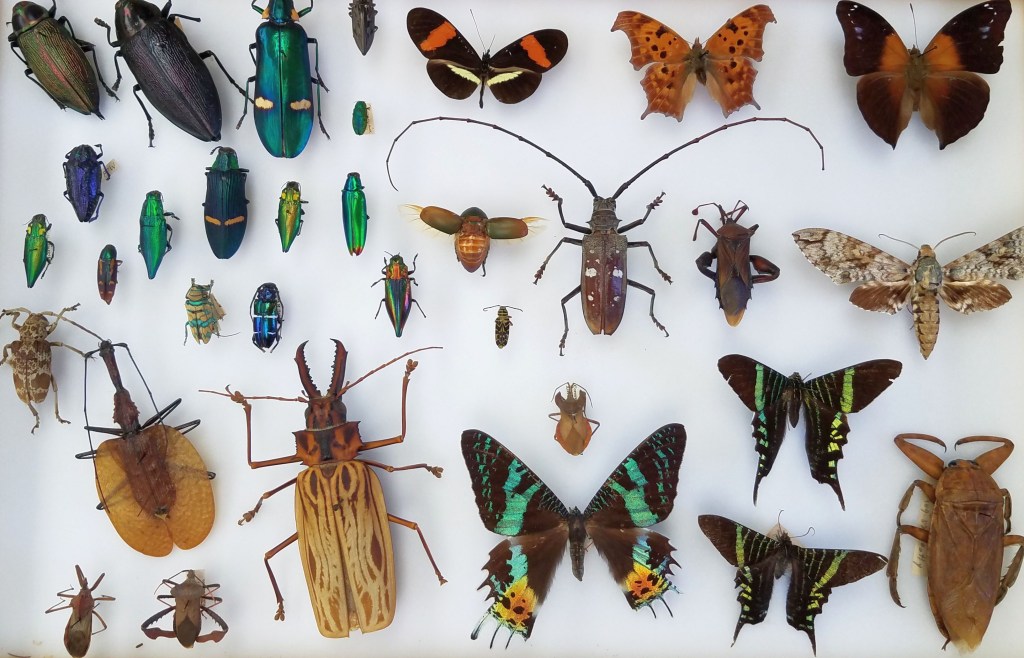
Depending on the ecological system being described or studied, the scope of biodiversity might be confined to a particular location or groups of locations. When we describe the biodiversity of organisms at one particular location, we refer to this as an assessment of alpha diversity (α diversity). This measurement is particularly useful for understanding what mixture of species are present within an area.

For example, if you were to measure the alpha diversity of a park in city of Chicago, you may include up to a mixture of 155 species of birds depending on the location of the park, numerous insect species, plant species, etc. Regardless of the type of species, because we have established our area of study as the park, every living species within the park will be included in the alpha diversity assessment.

(C) Penn State | Insect Biodiversity Center

When multiple locations are taken into consideration, this becomes what is considered a beta-diversity (β diversity) assessment. This type of assessment can be incredibly useful when assessing large regions for biodiversity. For example, β diversity is beneficial for assessing the biodiversity of a country, or a large region of land such as a state. In this application, alpha assessments are taken at many different habitats, and compiled in a beta diversity application.

The scenarios given above for α and β diversities involve looking at an ecosystem level. These terms can, however, be applied to smaller scales, for instance looking at the biodiversity among a certain species (either from observable characteristic or genetic differences).

The video below is a great example at looking at species diversity within ants in the Gorongosa National Park (Mozambique, Africa).


How does biodiversity arise?

Within every organism, there is a sequence of genetic information that makes up every characteristic of that individual. From time to time, sequences must copy themselves in order to create new cells or pass on genetic information. A nature-made machine, editing enzymes are not perfect and occasionally make errors. These mistakes involve either adding in a base pair that doesn’t below (e.g., AATCG becomes AATGCG), removing a base pair altogether (e.g., ACGT becomes AGT), or swapping one base pair with another (e.g., ACCT becomes ACCG). Changes such as these can be fatal depending on the location of the change, or can have no effect on function. Occasionally, errors (also known as mutations) can alter a function within the organism without being fatal, resulting in a change of a visible characteristic. If these mutations are heritable (or within the cells to be used during fertilization), they can be passed on to new generations.

With new genetic potential, if a particular change in function is beneficial to an organism, these characteristics boost this individual’s chance for survival–heightening its chance of passing along this beneficial mutation to more offspring. Over time, accumulation of desirable characteristics in a population begin to shift the genetic pool available during mating events. Through directional selection, or a movement toward a beneficial trait in a population, these organisms become more similar to each other at the sequence where the mutation occurred. Errors in sequencing will continue over time, and those that occur in heritable cells (sperm, egg, etc.) might allow for survival against a new environmental factor, contributing to further shifting in genomic patterns and eventually allowing for the possibility of a new species with unique traits to emerge.

With enough geographic isolation or lack of gene immigration from outside populations, mutations in a population accumulate and eventually can cause populations of what were once the same species to now be genetically distinct enough to be considered different species.

What are the pressures that could shape an organism’s survival?

In the context of mammals, after the mass extinction of dinosaurs in the Cretaceous period (estimated 145.5 million years ago) a wide range of habitats became available for surviving creatures to colonize. One lineage became especially adapted to new modes of life, eventually extending a branch providing us humans (Homo sapiens) the opportunity to wonder about these foundational moments in history.

The video below is an illustration of the new habitats created for ancestral mammals and the selective pressures driving the adaptations needed to thrive in them.

Perhaps one of the most cited examples of colonization into new habitats is a case of adaptive radiation in Darwinian Finches (1800s). The term adaptive radiation refers to the same logic we set forth earlier, stating that organisms that invade available niches will have selective pressures from the environment on traits that encourage their success. Organisms with beneficial mutations or heritable abilities will survive, pass on their genetic information, and in turn a new species of organisms can emerge over time, now adapted to this new habitat.

Below is another HHMI BioInteractive video I recommend on evolution in Galapagos finches observed by Charles Darwin.


What is the significance of biodiversity?

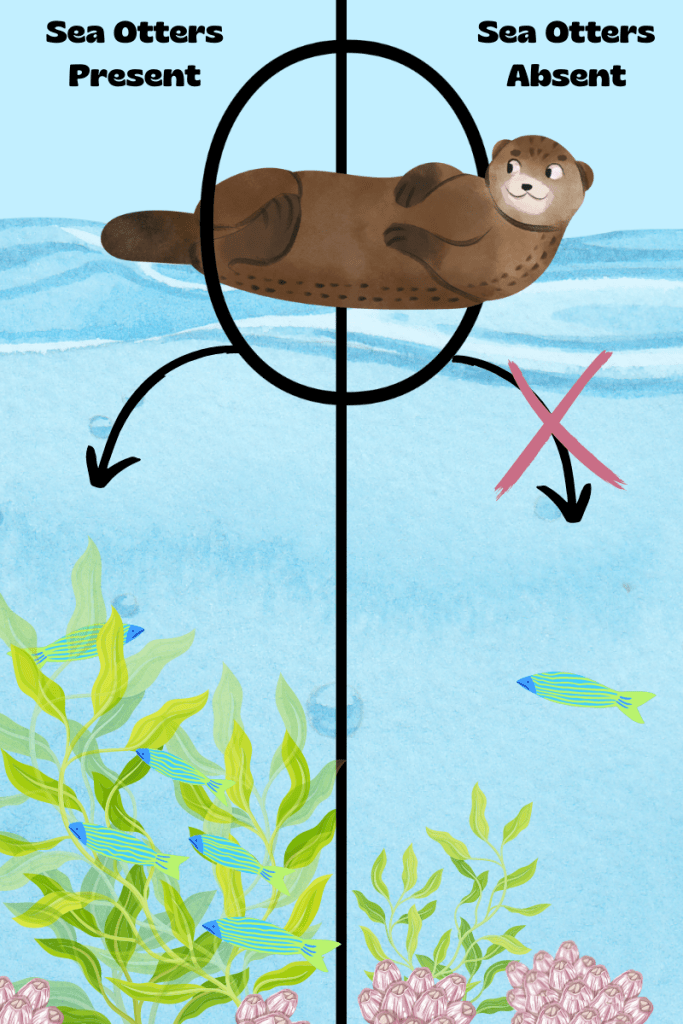
Once biodiversity is established in an area, there are heavy consequences for its collapse. The greatest example of this is with the removal or eradication of keystone species. These organisms are foundational species for an area, meaning their presence keeps the living systems surrounding them regulated. When removed, the ecosystem shortly collapses. One example is the sea otter! As illustrated in the image to the right, when sea otters are present in their environment, barnacle populations remain at low sustainable levels, allowing lush kelp forests to grow and provide shelter for a wide array of aquatic biodiversity. When sea otters are removed from their environment, barnacle populations grow exponentially without predation, resulting in a reduction of kelp forests. Once home to many fish species, without kelp these organisms must find new homes, and as a result are either forced to leave the area or are exposed to predators and collapse themselves.

Non-keystone species also have ecological roles in their environment, which can cause domino effects for species that rely on interactions with them or something they were directly involved with. For instance, some caterpillars are known to take place in what is known as ecosystem engineering. This means the organisms are altering their environment in some way, which in turn can be useful for other creatures. In the case of caterpillars, many will create sheltered burrows in rolled-up leaf material. These burrows remain once the caterpillar no longer needs them, and is then used as a home for many different types of insects.

Regardless of ecological status, all species comprising our global biodiversity contain intrinsic value for their representation of millions of years of evolutionary lineages and evolutionary potential.


How is biodiversity conserved?

At the heart of the drive toward conservation rests governmental policy. Unfortunately, organized citizen by citizen efforts to be conscious about their environmental interactions are limited by the amount of people educational platforms and word of mouth can reach. Only through true government-mediated policy–be that local or federal–will large scale conservation efforts be able to go into effect.

Conservation laws specifically targeting keystone species are incredibly beneficial. Under these policies, not only is the habitat of that keystone species protected, you are in turn automatically conserving the habitat for the other species that occupy the area. The term for this is having an umbrella species, meaning the conservation of one implies conservation of a vast amount of other species. Umbrella species do not always have to be considered a keystone species, but do have to share habitat parameters with other organisms for them to be inherently included in the conservation efforts.

In situations where an organism is dwindling and is not considered an umbrella species, conservation efforts may not benefit other individuals, and thus more efforts may be required to conserve many species in a particular area. To get involved in the politics underlying conservation, it is encouraged to search periodically for bills being presented and contact your local representatives to express desires for the passing of these policies.

Ultimately, awareness within the general public of conservation-related issues and personal, consistent interaction with local government officials is the pathway for driving ecological reform.


Every individual can make a difference in the fight against biodiversity loss!

Ways to Get Involved with Conservation

1) Educate yourself. Stay up to date on current issues in conservation biology. To do this, there are a few options for quick-resources on the latest topics: Eco News Now | Phys Org | Nature Portfolio.

2) Contact your local officials! Stay up to date by searching for current conservations bills being presented to legislators, and make your desires known! To find your representatives, you can use this White House search tool.

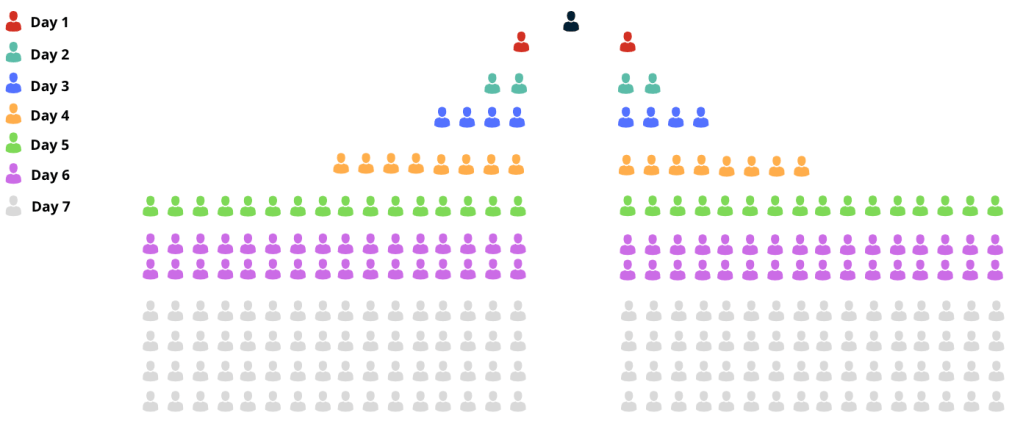
3) Spread Awareness! Even if you cannot contribute at the moment, ambassadorship for conservation biology can spread to someone who might be able to.There is exponential growth with spreading the word! Even spreading information to two individuals on a Monday, if each person tells two other people the next day, you have the potential to have reached 254 people by the end of the week (see the figure below)!

An example of the impact of educational spread.

4) Volunteer your time. It is best to make an impactful difference in a chosen area, so be sure to not spread yourself too thin! Many organizations offer volunteer opportunities, such as local preservation chapters and zoos. To find opportunities in your area, quick internet searches are often very effective. To save time, Our Endangered World has created a list of opportunities and subsequent ways to find organizations. Visit this information here.

Citizen scientists in action! Photo Courtesy of the Urban Turtle Project | Birmingham, Alabama (est. 2018)

5) If you do not have time to volunteer, do not fret! There are many ways you can symbolically adopt animals, many of which are housed in zoos and other preservation agencies. Here are examples of symbolic adoption packages offered by WWF (World Wildlife Fund, Inc.).

6) Contribute to citizen science! Getting involved with citizen science projects is an incredible way to experience current research first-hand. One example in Birmingham Alabama, The Urban Turtle Project, allows citizens to help in the capture and counting of turtle species across the state. To learn more about this organization, you can follow this link.


For additional information on conservation biology and the importance of biodiversity, you can view the attachment videos following this article!

Stay Adventurous,

Olivia Grace


Additional Resources: Educational Videos

TEDEd Talk on the Importance of Biodiversity


Crash Course on Conservation and Restoration Biology

Stuck Like Glue

I’ll be the first to admit, whenever I saw a butterfly with a broken wing, I was the kid to create a terrarium (not very decent, mind you) and stick him/her in it hoping it would grow back… and voila, the insect would be healed! Unfortunately, the outcome was always the same: they died. The sad reality is butterflies finish growing after their second stage of life, and without their wings, they don’t have the best mobility.

It wasn’t until I was bouncing around youtube one night when I found a video of a man actually repairing a wing for a butterfly with contact cement. Granted, the name gives the product a harsher sound than it is, as it is just a form of contact adhesive.

Without their in-tact wings, these beautiful insects are rendered flightless and will spend the rest of their days crawling around the ground. Without any intervention, this leaves them easy prey for birds, reptiles, bored toddlers, you name it. Luckily, there’s a solution, and if you’ve got the patience, the steps are quite simple.

If you are interested, the Live Monarch Foundation has a step by step guide to turning the quality of life around for these injured critters. Even if you don’t happen to find yourself in a situation like this, I find it worth the watch, because who doesn’t want to be an expert at butterfly wing repair?


Stay adventurous,
Olivia Grace

Debunking the Betta

Among the top breeds of fish to own, Bettas are the most often maltreated and neglected. Sold in containers merely double there size, buyers often believe the fish are able to thrive in tight conditions. Like any other fish type, tight surroundings leads to increased stress levels, and as a result, the fish become more susceptible to illness.

Housing

The best way to avoid bringing stress to your aquatic companion is to provide adequate swimming room with plenty of hides for stimulation. As a common rule, at MINIMUM, for every inch of fish, you should have a gallon of tank-space for the environment.

Other important factors to remember are that Bettas are tropical animals and flourish in water temperatures ranging from 78-80 degrees F. When water temperatures drop and remain below 74 degrees F, the fish can grow lethargic and again take on added stress levels.

Decorations

There are pros and cons to both fake-planted aquariums and aquascapes. Perks of having a non-planted aquarium include a low level of algae, however, the plants chosen need to be of a silk variety, as the harsh plastic of most aquarium decorations can shred the delicate fins of a Betta fish.

While providing a more natural living space, planted aquariums can lead to fungal infections if the tank does not have a decent filtration system and excess food/dead plant material is left to rot.

The tank style truly depends on the amount of time and money the owner is willing to put in to ensure a clean and sustainable environment.

Diet

Due to their carnivorous nature, Bettas require a wide-range of protein in their diet. Most pellet mixes will be sufficient, though it is more than acceptable to supplement bloodworms and freeze-dried krill into their diet from time to time.

Tankmates

A common misconception is that Betta fish have to live in isolation. While males need to be isolated from other males of the breed, sorority tanks often function quite successfully after an initial hierarchy is sorted out.

Bottom feeders such as snails, loaches, plecos, and African dwarf frogs, all make good companions as well due to their docile nature and tendency to stay out of the Betta’s way.

betta-1305203_1280

As always, it is important to make sure you have the money and time to dedicate to these beautiful creatures before you bring one home. Though they may be small, these fish do require time and attention to ensure they are living a healthy and proper lifestyle.


Stay adventurous,

Olivia

Metabolic Bone Disease: What to Do

Muscle spasms, loss of appetite, lethargy—all are common symptoms of Metabolic Bone Disease, also known as MBD. The sad reality of purchasing reptiles in pet stores who don’t hire specialists is often the UVB lighting is not replaced as often as it should be. Though UVB bulbs and light strips may still emit a light frequency, the potency of the fixture decreases over time, limiting the actual amount of UVB exposure the animal is receiving.

What to Do if Your Animal Shows Symptoms

As convenient as it would be to simply bring your reptile to the vet, often buyers are placed in a state of emergency when the new companion they bring home goes into severe spasms. This is a severe state of MTB, and while the animal IS capable of making a recovery, the likelier alternative is the animal will pass.

While under UVB lighting, the animal can be submerged in an electrolyte bath—X part clear-infant Pedialyte to X part water is sufficient. If the animal shows improvement between spasms, a meat-heavy baby food, for example, pureed chicken can be placed on the tongue of the reptile.

Opening the mouth of your reptile can be tricky, especially if they are in a slightly vegetative state. The safest way is to take a small skewer with a flattened end and gently pry open the side of the mouth. From here, the baby food can be glided across the tongue with a Q-tip, dull toothpick, etc.

For less severe symptoms, such as lethargy and loss of appetite, the best bet is to take your reptile to an exotic-trained veterinarian that can identify the source of the issue. As mentioned earlier, it is best to run through the components of your enclosure to consider if MTB is a possibility, or if there could be other issues brewing. UVB strips are excellent for target large areas of a terrarium, however, as their potency fades over time, they need to be switched out. As an average, every six months is reasonable for a strip or bulb to be replaced.

When Purchasing an Animal

Everyone tends to get caught up in the excitement of getting a new animal, and often overlook how the animal is acting, the housing environment, or diet provided.

Before ever purchasing a new companion, it is crucial to be an observer to the creature in its environment. Take note of the diet currently being fed—is it nourishing, is there a lack of nutrients? Notice the skin of the reptile—are the scales in good condition? Look at the eyes—are they reflective and clear, are they dull and cloudy? Most importantly, notice the interaction of the animal with its surroundings and be sure it does not appear lethargic. A new animal should be just as curious as you are to it. If the animal requires special lighting, don’t be afraid to ask an employee the last time the UVB bulb was switched.

Always be sure to hold special lighting as a priority for new companion animals. Unlike housing decorations, a lack of this could prove detrimental to the health and the two should be considered inseparable at the register—if you buy one, you buy the other.

IMG_1251

Olive, Chinese Crested Water Dragon

Before you purchase any animal, be sure to do your research, not only the habitat and diet but of the potential ailments as well. Above all else, don’t be afraid to question the health of the animals being purchased, as this could better prepare you for the road ahead for you and your new companion.

Stay adventurous,

Olivia Grace

Back in Business!

Over the summer, I went on tour with a traveling Drum and Bugle Corps, which took me away from the blogging world for a while. Needless to say, I’m back, and getting to see the rich wildlife we have across this country has me fueled more than ever! Who knew dragonflies could come in so many different shapes and sizes?

Some of the creatures I met were on the larger scale, but the vast majority were on the smaller side.

I found this American Dagger Moth caterpillar on a backpack in Mt. Carmel, Pennsylvania. Though the protruding hairs from the green ball of fuzz can be alarming, you have no need to fear of it stinging you. Do take notice, however, that I have him on a stick. While they don’t sting, their hollow locks can break off when touching your skin and will release a nasty toxin.IMG_0850

Oddly enough, at the same housing site, I made another companion–a ringneck snake! Ever since I read about these beauties in a herpetology textbook, I’ve been dying to meet one up close, and I must say, I was not disappointed. Spanning up to 15 inches long, Ringnecks carry a docile temperament and make the perfect companions–be it short term or long term.

Exploring the different creatures across the country was definitely one of my favorite aspects of the summer, and I can’t wait to share with you countless of others. Until we meet again, always remember: Whether near or far, learning about nature’s creations will always link back to where you are.

IMG_0943