Back in Business!

Over the summer, I went on tour with a traveling Drum and Bugle Corps, which took me away from the blogging world for a while. Needless to say, I’m back, and getting to see the rich wildlife we have across this country has me fueled more than ever! Who knew dragonflies could come in so many different shapes and sizes?

Some of the creatures I met were on the larger scale, but the vast majority were on the smaller side.

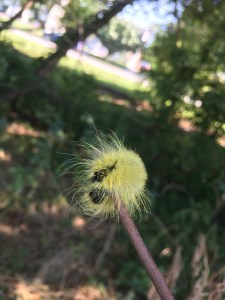
I found this American Dagger Moth caterpillar on a backpack in Mt. Carmel, Pennsylvania. Though the protruding hairs from the green ball of fuzz can be alarming, you have no need to fear of it stinging you. Do take notice, however, that I have him on a stick. While they don’t sting, their hollow locks can break off when touching your skin and will release a nasty toxin.IMG_0850
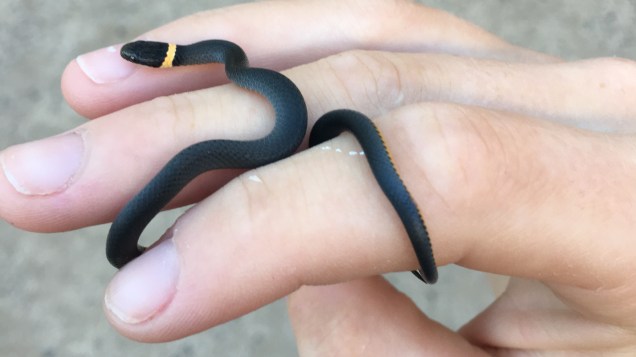
Oddly enough, at the same housing site, I made another companion–a ringneck snake! Ever since I read about these beauties in a herpetology textbook, I’ve been dying to meet one up close, and I must say, I was not disappointed. Spanning up to 15 inches long, Ringnecks carry a docile temperament and make the perfect companions–be it short term or long term.

Exploring the different creatures across the country was definitely one of my favorite aspects of the summer, and I can’t wait to share with you countless of others. Until we meet again, always remember: Whether near or far, learning about nature’s creations will always link back to where you are.
IMG_0943


Happy Morph Day!

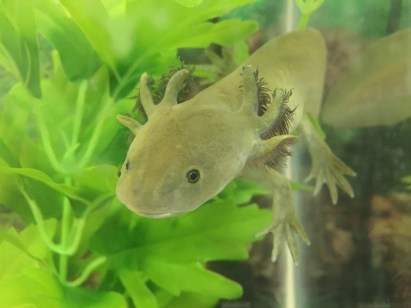
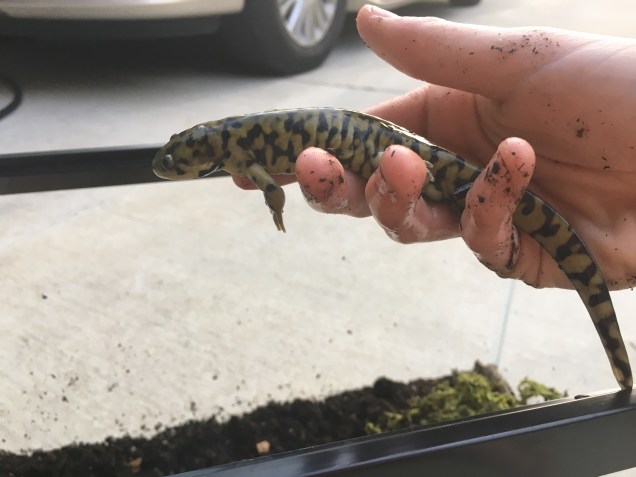
I’ll be the first to admit this post is long overdue. Around Spring break, I figured Milo would complete his change within the week, but I was surprised to watch it undergo another month. That being said, he is now a happy seven-inch salamander!

IMG_8926.JPG

HANDLING SALAMANDERS:

Be sure to have completely moist, clean hands, as lacking to do so can present harmful salts and oils to the salamander; Limit handling to short intervals.

The first noticeable sign of his change was the regression of his gills. Eventually, he began to loom around the surface of the water, so I moved him to a shallower enclosure with a hideout to crawl out on. I will say this was the more tedious part of the transition–not so much the change of environment but waiting for him to fully make the leap from aquatic to terrestrial.

Beginning of Gill Regression

IMG_7370.jpg

Once they do make the switch, it’s best to allow them an enclosure of moist, loose dirt (NO fertilizer) with plants and shaded areas to hide under. As for diet, crickets, mealworms, and earthworms can be let loose in the enclosure for the salamander to feed on as it pleases. The benefit of having mealworms over crickets appears to be centered around Milo residing most of his time underground. This way he is not forced to come up for food and is able to remain under the dirt where he is currently the most comfortable.

He is definitely camera shy in his terrestrial form, but I do hope to have more pictures of his transformation in the weeks to come.