Stuck Like Glue

I’ll be the first to admit, whenever I saw a butterfly with a broken wing, I was the kid to create a terrarium (not very decent, mind you) and stick him/her in it hoping it would grow back… and voila, the insect would be healed! Unfortunately, the outcome was always the same: they died. The sad reality is butterflies finish growing after their second stage of life, and without their wings, they don’t have the best mobility.

It wasn’t until I was bouncing around youtube one night when I found a video of a man actually repairing a wing for a butterfly with contact cement. Granted, the name gives the product a harsher sound than it is, as it is just a form of contact adhesive.

Without their in-tact wings, these beautiful insects are rendered flightless and will spend the rest of their days crawling around the ground. Without any intervention, this leaves them easy prey for birds, reptiles, bored toddlers, you name it. Luckily, there’s a solution, and if you’ve got the patience, the steps are quite simple.

If you are interested, the Live Monarch Foundation has a step by step guide to turning the quality of life around for these injured critters. Even if you don’t happen to find yourself in a situation like this, I find it worth the watch, because who doesn’t want to be an expert at butterfly wing repair?


Stay adventurous,
Olivia Grace
Back in Business!

Over the summer, I went on tour with a traveling Drum and Bugle Corps, which took me away from the blogging world for a while. Needless to say, I’m back, and getting to see the rich wildlife we have across this country has me fueled more than ever! Who knew dragonflies could come in so many different shapes and sizes?

Some of the creatures I met were on the larger scale, but the vast majority were on the smaller side.

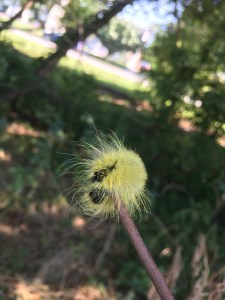
I found this American Dagger Moth caterpillar on a backpack in Mt. Carmel, Pennsylvania. Though the protruding hairs from the green ball of fuzz can be alarming, you have no need to fear of it stinging you. Do take notice, however, that I have him on a stick. While they don’t sting, their hollow locks can break off when touching your skin and will release a nasty toxin.IMG_0850

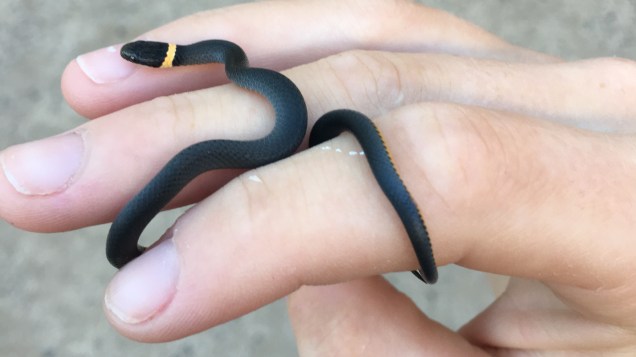
Oddly enough, at the same housing site, I made another companion–a ringneck snake! Ever since I read about these beauties in a herpetology textbook, I’ve been dying to meet one up close, and I must say, I was not disappointed. Spanning up to 15 inches long, Ringnecks carry a docile temperament and make the perfect companions–be it short term or long term.

Exploring the different creatures across the country was definitely one of my favorite aspects of the summer, and I can’t wait to share with you countless of others. Until we meet again, always remember: Whether near or far, learning about nature’s creations will always link back to where you are.

IMG_0943


The Slaying Mantis

crocus-100157_1280You come home from a long day’s work to relax in your garden, only to find yourself swatting at pests that keep multiplying. Not to mention, you’ve begun to notice recurring holes in your plant leaves.
With all the hard work you’ve put in, wouldn’t it be nice to have a form of pest control that you didn’t have to constantly re-apply?

Mantis religiosa, commonly known as the praying mantis, serves as an excellent protector in that it defends plants from invaders while itself requiring little human care/attention.

What’s the benefit?

Mantis religiosa casings typically hatch around 300 eggs, but do not be alarmed at this large value! On average, only around one fifth of the hatchlings survives to reach maturity.

After reaching adulthood, these insects will eat anything they can grasp. Often perceived as slow, mantids are actually voracious hunters and are able to take in their prey within a matter of seconds. Assuming sixty mantises make it to adulthood from the casing, you’re looking at a decent-sized army for your garden.

The average lifespan of a mantis ranges from four to six months. This allows for cases to be let down twice a year, saving you added time for routine pest maintenance. The odds are, however, that the mantises you place originally will breed to form their own cases, causing the initial purchase to turn into a long-term, compounding investment.

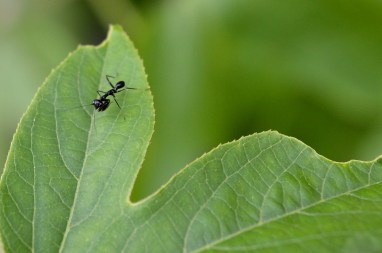
praying-166788_1280  praying-1197615_1280.jpg                                            Common mantis | Common Black Ant

How do you raise them?

When hatching, the mantises will need to be placed in either a hatching net or an enclosure that is large enough to accommodate the soon-to-be nymphs. Due to their small nature, the younglings will need to be fed fruit flies (flightless options are available at minimal cost). When they grow large enough to eat other, larger insects (e.g. ladybugs), they can then be released into your garden to be self-sustaining.

Where do I get them?

Mantid casings can be purchased for as low as $5.00 each from Arbico Organics. In addition, cases can be found from locations such as Amazon and Ace Hardware.

In case you are interested, I have listed a few general items to consider purchasing below:

Egg Cases | Arbico Organics

Egg Cases & Habitat | Amazon

Wingless Fruit Fly Starter Kit | Amazon