The Third Eye: A Reptilian Perspective

For many humans seeking enlightenment, or a higher form of self-being, the third eye serves as a representation of the internal chamber, or pineal gland, that bridges a gap between the plane we inhabit and other unknown planes existing among us (McGovern, 2007). In the case of a certain reptile, however, interpretations about the role of the third eye rely purely on anatomical physiology. The tuatara (Sphenodon punctatus) is a member of the order Rhynchocephalia, and the last of its evolutionary line. Sometimes these animals are referred to as lizards, though this is not quite a correct assessment. These organisms are more pseudo-lizards, as phyletically (or organizationally to other organisms) tuatara comprise of their own independent clade and traditional lizards are within a separate order, Squamata; see Figure 1.

In addition to being the last living representatives of Rhynchocephalia, tuatara are the oldest known living reptiles–even predating the emergence of dinosaurs (Helicon, 2018; Gemmell et al., 2020). These reptiles are thought to have been first named by the Māori tribe, an indigenous group of peoples whom inhabited regions of New Zealand around 700 years ago. To local tribes, tuatara were thought to be embodiments of guardians that would protect sacred locations (Gemmell et al., 2020).

Tuatara can be found on 30 small islands in New Zealand (Helicon, 2018), however population trends as of recent are unknown and more research into organism abundance and habitat quality assessments are needed. These reptiles can live up to 60 years under proper conditions, 20 years more than the longest-known living lizard the Komodo dragon (Smithsonian’s NZCBI). Perhaps having direct access for the world through the pineal gland or ‘third eye’ has a role to play in maintaining such an elongated lifespan.
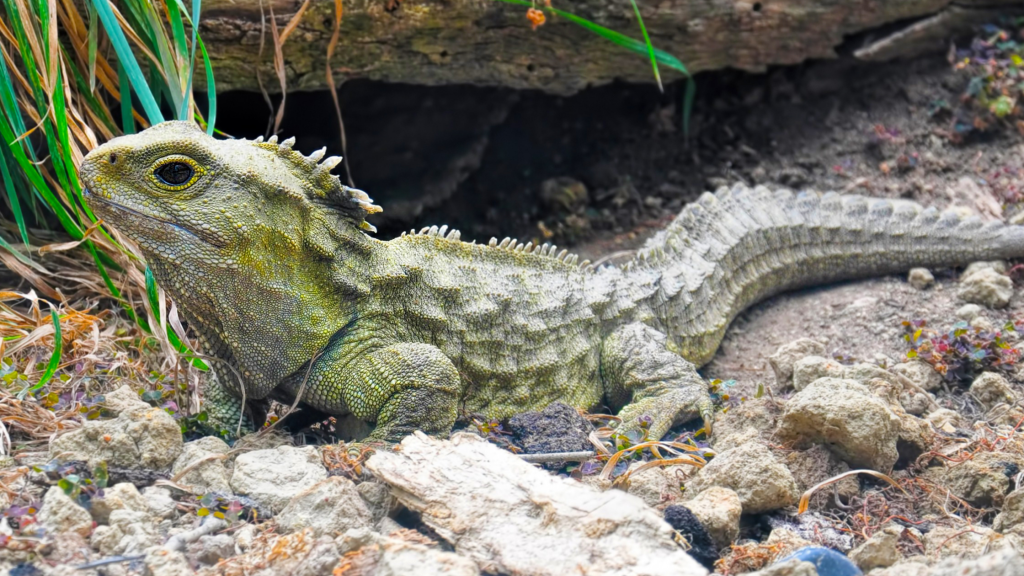
Environmental access to the pineal gland is on top of the tuatara’s head medial to the eyes, but placement is closer toward the spine than the nostril region (see the photo on the right). Researchers deemed this access point to the gland ‘the third eye’, as this small opening in fact contains a functioning and innervated retina! The third eye plays such a crucial role in organismal function that it has remained evolutionarily (genetically) unchanged for roughly 220 million years (Helicon, 2018). As for the specific purpose, this access point to the pineal gland is believed to serve as a regulator for sun exposure. As an ectotherm, tuatara rely primarily on environmental temperatures to alter internal body temperatures. The third eye contributes to behavioral regulation for optimal sun exposure, helping to maintain the body at an ideal level of heat (Stebbins, 1958).

Though not spiritual in nature, the fundamental understandings we have on the third eye of the tuatara has fueled evolutionary research–specifically in regard to amniote divergence on the geologic time scale (Gemmell et al., 2020).

If you are interested in learning more about this species, Discovery UK has a wonderful educational video on the subject, accessible below.

Stay Adventurous,

Olivia Grace

References


Gemmell, N. J., K. Rutherford, S. Prost, et al.. 2020. “The tuatara genome reveals ancient features of amniote evolution.” Nature, 584: 403-409.

Helicon. 2018. “Tuatara.” The Hutchinson unabridged encyclopedia with atlas and weather guide.

McGovern, U.. 2007. “Third eye.” Chambers Dictionary of the unexplained. ISBN: 978-0-550-10215-7

Stebbins, R. C.. 1958. “An experimental study of the ‘third eye’ of the tuatara.” Copeia, 3: 183-190. DOI: 10.2307/1440585

Diving Deep: the Anglerfish

The Anglerfish, to some, is a true deep-sea nightmare–and not just to Marlin and Dory on their search for Nemo! This species was discovered in 1833 by an English naturalist named James Yate Johnson. At the time of discovery, not much was known about the ecology and lifestyle of this ghoulish fish, as the only details came from deceased specimens. Whereas in recent years deep-sea divers have added much to our compendium of anglerfish, much of their lifestyle is still shrouded in mystery. There are over 200 species of anglerfish extant today, varying in lifestyle and size, but they all have one thing in common: an elongated cranial spine tipped with a bioluminescent organ. 

Most anglerfish live in the bathypelagic region of the open ocean—in other words, they live in the deep, dark, and cold regions, about 2000 m (6600 ft) below the surface. In complete absence of light with scarce food in the ocean depths, these ambush predators evolved their own ways to hunt and survive—by underwater fishing! The anglerfish uses its modified cranial spine to imitate other organisms in the darkness, with the photophore at the tip using a process of bioluminescence to create a blue-green light to lure in other small marine animals. Once a prey fish is in adequate range, the anglerfish will use its powerful jaws to suck in its meal whole. Though some anglerfish can reach up to four feet long and 110 pounds, most are fairly small. Despite this stature, members of this species are known to be able to swallow prey twice their size.

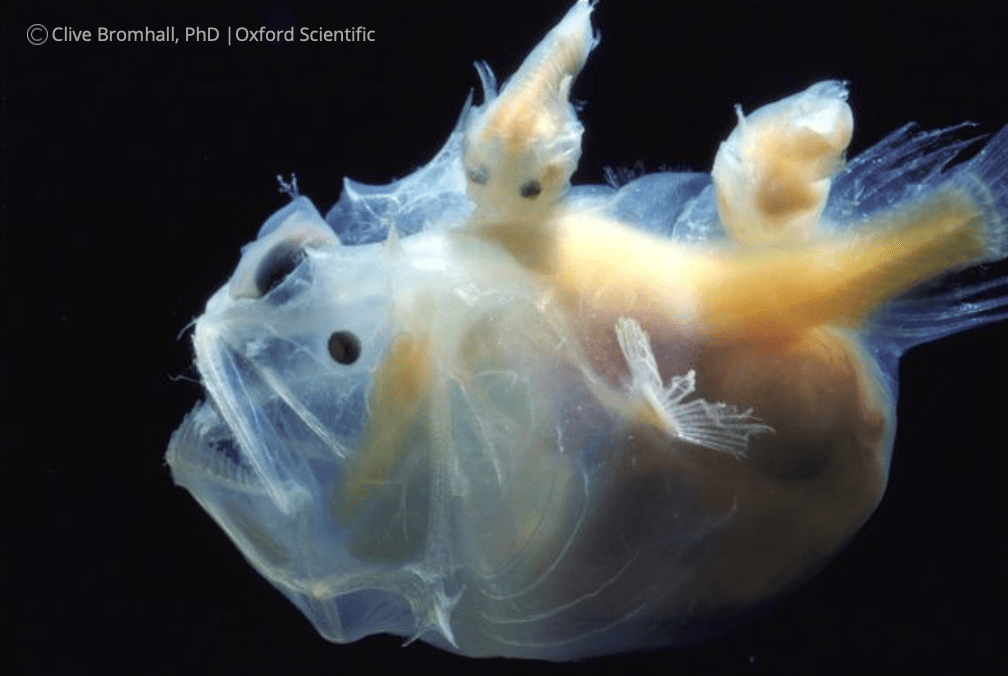
Museum specimen of an Anglerfish, genus Acentrophryn; image taken by Hongseok Kim in Seoul, South Korea.
Museum specimen of an Anglerfish, genus Ceratias; image taken by Hongseok Kim in Seoul, South Korea.

The bizarre appearance and predation style of anglerfish aren’t the only factors that make these fish so interesting. In fact, one of the most fascinating and unusual practices of some anglerfish species is their disturbing mating habit! For around 90 years after the first anglerfish was discovered, scientists and researchers were baffled as the only anglerfish they were finding were all females. That’s right, every anglerfish with a lure is female! These females were sometimes found with small growth like fish attached to their bellies and were believed to be their offspring. The behavior and ecology of male anglerfish were a total mystery until 1924 when Charles Tate Regan dissected a smaller, attached fish on a female and discovered they were neither growths nor offspring, but the female’s mate! 

Male anglerfish are substantially smaller than females, only about one inch long, and lack lures, large maws, and the frightening teeth of their female counterparts. Since males are not equipped for survival on their own, they spend their lives seeking out a female mate— and mate they do. Male anglerfish have small hook teeth that they use to latch onto a female’s body. Once attached, the male anglerfish releases an enzyme that dissolves the membranes of his mouth and her skin so that their bodies can fuse together, blood vessels and all! The male will lose the body parts no longer necessary to him, including eyes, fins, and sometimes even his own internal organs. He is then entirely dependent on the female for nutrition and survival and essentially becomes a fleshy lump, ready to release sperm into the water when his mate chooses to release eggs for fertilization. Even more fascinating, a female can carry up to six males at one time!

Not every species of male anglerfish is destined to such a dark fate, but this seemingly parasitic form of reproduction sure does sound like the stuff of science fiction. So, if you’re ever feeling down in the dumps about your love life, just remember: at least you’re not an anglerfish! 

Pollution to Solution: Rice University Reactor Studies aid in Climatic and Biochemical Research

Screen Shot 2021-10-28 at 11.40.09 PM

In 2019, a group of researchers from Rice University created a reactor capable of reducing atmospheric carbon dioxide into a usable energy source: formic acid. Formic acid fuel-cell energy is a better long-term alternative than utilizing hydrogen fuel-cell energy—as researchers indicate hydrogen gas is harder to get into a condensed state. Head researcher Haotian Wang was able to create this reactor by eliminating a need for salts in the solution. Typically, salts have been used for reducing atmospheric carbon dioxide, but Wang suggested to instead use a solid electrolyte that degrades more slowly. Not only was this created catalyst slower in degradation, it was also more stable (held form during the reaction). Success rate for this reactor depended on the speed at which the reaction took place; higher speeds gained better results, and researchers achieved nearly a 50% collection of formic acid at the end of the trials.

While producing a useful and strong biochemical fuel, the lab’s research primarily aimed to reduce the amount of greenhouse gasses in the atmosphere. Global warming is a threat to our planet and the multitude of species that inhabit it. A continual increase in greenhouse gasses would only accelerate the effects of global climate change. The research being done at Rice University holds tremendous value toward conservation efforts, because by lowering greenhouse gas concentrations in the atmosphere, the resulting stress effects these gasses hold on species could lessen overtime. A decreased presence of external stressors on a population can significantly decrease an organism’s vulnerability to extinction. While this reactor is still a prototype in the lab,  researchers feel they could scale their methods to work at industry level, which would allow this method of lowering greenhouse gasses to extend to international use. Ensuring high carbon-emitting, industrialized countries have access to this technology holds potential to make climate conservation on the multinational level much more attainable. Combating climate change is one of the most important issues in ensuring the conservation of our planet’s species, and while more testing and tinkering with the reactor is needed, this process is a step in righting the damage done.

Wang and his team were published in Nature Communications in 2020. If you would like to read the paper released, you can find it here.

Since publishing this paper, the Wang Lab has received many awards for their continued research into the use of reactors to isolate compounds from the environment. More recently, scientists in the Wang Lab have discovered a more efficient way of synthesizing Hydrogen Peroxide (H2O2) from environmental factors using a boron-attached carbon molecule as fuel, or a catalyst, for the collection pathway. Hydrogen peroxide is an oxidizing chemical commonly used in scientific research and medicinal practices. In prior years to now, synthesizing hydrogen peroxide was difficult to achieve due to the the reactive favorability of the molecules involved to convert to water. The pathway perfected by the Wang Lab research team allows for more stabile accumulation process of hydrogen peroxide molecules, well as higher ratios of molecule collected.

Haotian Wang and the researchers in his lab continue their efforts in molecular synthesis as it related to environmental cleanup, and are making headlines among environmental and biochemists worldwide. If you would like to keep up with the efforts from the research team, you can follow the University’s update page here

Wang Lab Researchers Synthesizing H2O2

Stay Adventurous,

Olivia

Your Neighborhood Gecko

Because of their solo nature, it’s not likely to spot a group of geckos in the wild. However, one species of gecko has adapted to a more urban lifestyle: the Mediterranean Gecko. Better known as the Common House Gecko, these creatures originated between the Northern parts of Africa and Southern Europe.

gecko-2656812_1280

First introduced to other warm countries, the Mediterranean Gecko made its way to Florida and has been leaving a trail ever since. If you live in an urbanized part of the Southeastern United States, there’s a good chance you have a few house guests.

Don’t be alarmed yet, though. These lizards are ferocious insect hunters and are great for keeping down the insect population outside your home. The best way to spot them is at night on a lit porch where insects tend to collect, however on occasion, you may be able to see some wandering about throughout the day.  These geckos tend to be skittish and are likely to run from human presence, but if you happen to get close to one, their docile nature presents no cause for danger.

While there is a wide range of color morphs for Mediterranean Geckos, a few identifying characteristics remain the same. If you feel you have a few new outdoor companions, the identification guide below might prove useful:

Screen Shot 2018-06-19 at 4.48.59 PM

If you answered yes to all of these questions, then you’ve got yourself a fierce home defender! They may not be the best at insuring your cars, but they will definitely give bugs a run for their money.


Protecting the Pangolin

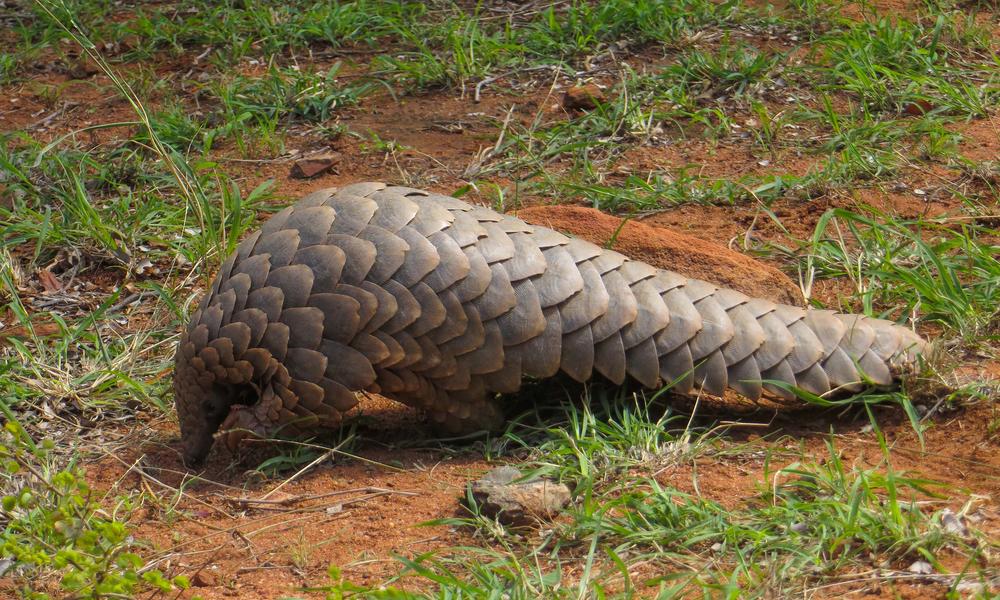
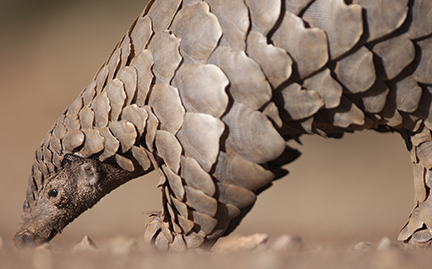
Illegally trafficked for their scales, the Pangolin ranks as the number one most unlawfully trafficked animal, putting the species in imminent jeopardy of extinction.

Pangolin Image by WWF
Photo Courtesy of the World Wide Fund for Nature (WWF)

The use of the scales dates back to roughly 1820 in Asia, where the keratin flakes were used as armor coating. Aside from protein, additional uses of the animal were medicinal. In Chinese culture, drying the scales followed by roasting is believed to cure various ailments such as skin disease, infection, or paralysis.

Over decades, this once flourishing species began to dwindle in numbers and was placed on the endangered species list in November 2010 by the Zoological Society of London. In 2016, the 8 different sub-species of Pangolin were given the highest level of protection by the International Fund for Animal Welfare, IFAW, including against trafficking. The species is currently listed under Appendix 1 of CITES: Convention on the International Trade in Endangered Species.

Despite the efforts to conserve the species, Pangolin trafficking is still active. Just last year, 12 tons of dried Pangolin scales were confiscated in China in an “empty” shipping container. According to the Maritime Executive, officials estimate 20,000 Pangolins were killed to achieve the amount found. The scales were believed meant to enter the Chinese Black Market, where the use of Pangolin for medicine is still widely prominent.

large-Pangolin-photo
Photo Courtesy of WWF

Organizations such as WWF and the IAFW are currently trying to counter the poaching efforts for this endangered animal. Unfortunately, however, until stronger international laws are achieved, these scaly critters will continue to need advocates to fend against what their natural armor cannot.

Stuck Like Glue

I’ll be the first to admit, whenever I saw a butterfly with a broken wing, I was the kid to create a terrarium (not very decent, mind you) and stick him/her in it hoping it would grow back… and voila, the insect would be healed! Unfortunately, the outcome was always the same: they died. The sad reality is butterflies finish growing after their second stage of life, and without their wings, they don’t have the best mobility.

It wasn’t until I was bouncing around youtube one night when I found a video of a man actually repairing a wing for a butterfly with contact cement. Granted, the name gives the product a harsher sound than it is, as it is just a form of contact adhesive.

Without their in-tact wings, these beautiful insects are rendered flightless and will spend the rest of their days crawling around the ground. Without any intervention, this leaves them easy prey for birds, reptiles, bored toddlers, you name it. Luckily, there’s a solution, and if you’ve got the patience, the steps are quite simple.

If you are interested, the Live Monarch Foundation has a step by step guide to turning the quality of life around for these injured critters. Even if you don’t happen to find yourself in a situation like this, I find it worth the watch, because who doesn’t want to be an expert at butterfly wing repair?


Stay adventurous,
Olivia Grace

Debunking the Betta

Among the top breeds of fish to own, Bettas are the most often maltreated and neglected. Sold in containers merely double there size, buyers often believe the fish are able to thrive in tight conditions. Like any other fish type, tight surroundings leads to increased stress levels, and as a result, the fish become more susceptible to illness.

Housing

The best way to avoid bringing stress to your aquatic companion is to provide adequate swimming room with plenty of hides for stimulation. As a common rule, at MINIMUM, for every inch of fish, you should have a gallon of tank-space for the environment.

Other important factors to remember are that Bettas are tropical animals and flourish in water temperatures ranging from 78-80 degrees F. When water temperatures drop and remain below 74 degrees F, the fish can grow lethargic and again take on added stress levels.

Decorations

There are pros and cons to both fake-planted aquariums and aquascapes. Perks of having a non-planted aquarium include a low level of algae, however, the plants chosen need to be of a silk variety, as the harsh plastic of most aquarium decorations can shred the delicate fins of a Betta fish.

While providing a more natural living space, planted aquariums can lead to fungal infections if the tank does not have a decent filtration system and excess food/dead plant material is left to rot.

The tank style truly depends on the amount of time and money the owner is willing to put in to ensure a clean and sustainable environment.

Diet

Due to their carnivorous nature, Bettas require a wide-range of protein in their diet. Most pellet mixes will be sufficient, though it is more than acceptable to supplement bloodworms and freeze-dried krill into their diet from time to time.

Tankmates

A common misconception is that Betta fish have to live in isolation. While males need to be isolated from other males of the breed, sorority tanks often function quite successfully after an initial hierarchy is sorted out.

Bottom feeders such as snails, loaches, plecos, and African dwarf frogs, all make good companions as well due to their docile nature and tendency to stay out of the Betta’s way.

betta-1305203_1280

As always, it is important to make sure you have the money and time to dedicate to these beautiful creatures before you bring one home. Though they may be small, these fish do require time and attention to ensure they are living a healthy and proper lifestyle.


Stay adventurous,

Olivia

Metabolic Bone Disease: What to Do

Muscle spasms, loss of appetite, lethargy—all are common symptoms of Metabolic Bone Disease, also known as MBD. The sad reality of purchasing reptiles in pet stores who don’t hire specialists is often the UVB lighting is not replaced as often as it should be. Though UVB bulbs and light strips may still emit a light frequency, the potency of the fixture decreases over time, limiting the actual amount of UVB exposure the animal is receiving.

What to Do if Your Animal Shows Symptoms

As convenient as it would be to simply bring your reptile to the vet, often buyers are placed in a state of emergency when the new companion they bring home goes into severe spasms. This is a severe state of MTB, and while the animal IS capable of making a recovery, the likelier alternative is the animal will pass.

While under UVB lighting, the animal can be submerged in an electrolyte bath—X part clear-infant Pedialyte to X part water is sufficient. If the animal shows improvement between spasms, a meat-heavy baby food, for example, pureed chicken can be placed on the tongue of the reptile.

Opening the mouth of your reptile can be tricky, especially if they are in a slightly vegetative state. The safest way is to take a small skewer with a flattened end and gently pry open the side of the mouth. From here, the baby food can be glided across the tongue with a Q-tip, dull toothpick, etc.

For less severe symptoms, such as lethargy and loss of appetite, the best bet is to take your reptile to an exotic-trained veterinarian that can identify the source of the issue. As mentioned earlier, it is best to run through the components of your enclosure to consider if MTB is a possibility, or if there could be other issues brewing. UVB strips are excellent for target large areas of a terrarium, however, as their potency fades over time, they need to be switched out. As an average, every six months is reasonable for a strip or bulb to be replaced.

When Purchasing an Animal

Everyone tends to get caught up in the excitement of getting a new animal, and often overlook how the animal is acting, the housing environment, or diet provided.

Before ever purchasing a new companion, it is crucial to be an observer to the creature in its environment. Take note of the diet currently being fed—is it nourishing, is there a lack of nutrients? Notice the skin of the reptile—are the scales in good condition? Look at the eyes—are they reflective and clear, are they dull and cloudy? Most importantly, notice the interaction of the animal with its surroundings and be sure it does not appear lethargic. A new animal should be just as curious as you are to it. If the animal requires special lighting, don’t be afraid to ask an employee the last time the UVB bulb was switched.

Always be sure to hold special lighting as a priority for new companion animals. Unlike housing decorations, a lack of this could prove detrimental to the health and the two should be considered inseparable at the register—if you buy one, you buy the other.

IMG_1251

Olive, Chinese Crested Water Dragon

Before you purchase any animal, be sure to do your research, not only the habitat and diet but of the potential ailments as well. Above all else, don’t be afraid to question the health of the animals being purchased, as this could better prepare you for the road ahead for you and your new companion.

Stay adventurous,

Olivia Grace

Back in Business!

Over the summer, I went on tour with a traveling Drum and Bugle Corps, which took me away from the blogging world for a while. Needless to say, I’m back, and getting to see the rich wildlife we have across this country has me fueled more than ever! Who knew dragonflies could come in so many different shapes and sizes?

Some of the creatures I met were on the larger scale, but the vast majority were on the smaller side.

I found this American Dagger Moth caterpillar on a backpack in Mt. Carmel, Pennsylvania. Though the protruding hairs from the green ball of fuzz can be alarming, you have no need to fear of it stinging you. Do take notice, however, that I have him on a stick. While they don’t sting, their hollow locks can break off when touching your skin and will release a nasty toxin.IMG_0850

Oddly enough, at the same housing site, I made another companion–a ringneck snake! Ever since I read about these beauties in a herpetology textbook, I’ve been dying to meet one up close, and I must say, I was not disappointed. Spanning up to 15 inches long, Ringnecks carry a docile temperament and make the perfect companions–be it short term or long term.

Exploring the different creatures across the country was definitely one of my favorite aspects of the summer, and I can’t wait to share with you countless of others. Until we meet again, always remember: Whether near or far, learning about nature’s creations will always link back to where you are.

IMG_0943


Knick Gnat

Hello, all!

This is Brooke here!  If you don’t already know, I’m the editor of this blog and will be filling in for Olivia while she is off on a tour for her drum corps.  I’ve got to warn you all that I’m not exactly as lucky as Olivia when it comes to finding wildlife, so we may be scraping the bottom of the barrel here.  But hopefully, I can get you guys thinking a little bit about the smaller things in life!

So, I just recently got back from an Army camp, and there weren’t too many animals lounging around on base.  But I was lucky enough to have several of these cute little guys fly into my eyes/mouth/ears every day.

ya

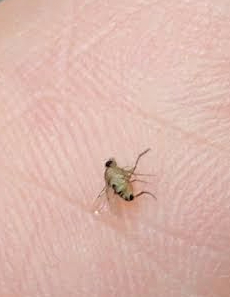
Don’t worry, it’s not dead.  Actually I lied.  Yes, yes it is dead.  But considering that these guys were a little overpopulated, and definitely not endangered, I decided to sacrifice it for the good of this website and so that it wouldn’t fly into my eyes.

Although there are many varieties of what is commonly known as “gnat”, all of them fall under the suborder Nematocerca in the order Diptera.  One of the defining characteristics of the order Diptera is the two single wings design(as opposed to, for example, the four wing design of the dragonfly).  One interesting fact about the two single wing design is that it actually evolved from the four wing design.  Although there is always speculation about how evolution progresses, a large number of biologists would agree that the evolution of the two single wing design resulted from a developmental mutation involving the amount of a certain hormone being released during embryonic development.

But, I digress.  “Gnats” are typically found in warm, humid environments.  Depending on the variety, the literature will tell you that they eat things such as fungus, moss, nectar, etc.  However, like many other animals, they have begun to adapt to human habitation.  I personally have observed them to dine on things such as dead animals, human food, and sweat.

As annoying as they may be, gnats play an important part in the ecosystem, serving as food for other animals such as birds, bats, and even larger insects.  They can also serve as pollinators.

Well, that’s about all I have for you all today.  I would say, “save the gnats”, but I honestly don’t think we could get rid of them if we wanted to.  So how about  “appreciate the gnats?” Yeah, I like the sound of that.  I’ll talk to Olivia about putting that one on one of her little T shirts.  Best-seller?

Yours in animal conservation,

Brooke Kowalski