Metabolic Bone Disease: What to Do

Muscle spasms, loss of appetite, lethargy—all are common symptoms of Metabolic Bone Disease, also known as MBD. The sad reality of purchasing reptiles in pet stores who don’t hire specialists is often the UVB lighting is not replaced as often as it should be. Though UVB bulbs and light strips may still emit a light frequency, the potency of the fixture decreases over time, limiting the actual amount of UVB exposure the animal is receiving.

What to Do if Your Animal Shows Symptoms

As convenient as it would be to simply bring your reptile to the vet, often buyers are placed in a state of emergency when the new companion they bring home goes into severe spasms. This is a severe state of MTB, and while the animal IS capable of making a recovery, the likelier alternative is the animal will pass.

While under UVB lighting, the animal can be submerged in an electrolyte bath—X part clear-infant Pedialyte to X part water is sufficient. If the animal shows improvement between spasms, a meat-heavy baby food, for example, pureed chicken can be placed on the tongue of the reptile.

Opening the mouth of your reptile can be tricky, especially if they are in a slightly vegetative state. The safest way is to take a small skewer with a flattened end and gently pry open the side of the mouth. From here, the baby food can be glided across the tongue with a Q-tip, dull toothpick, etc.

For less severe symptoms, such as lethargy and loss of appetite, the best bet is to take your reptile to an exotic-trained veterinarian that can identify the source of the issue. As mentioned earlier, it is best to run through the components of your enclosure to consider if MTB is a possibility, or if there could be other issues brewing. UVB strips are excellent for target large areas of a terrarium, however, as their potency fades over time, they need to be switched out. As an average, every six months is reasonable for a strip or bulb to be replaced.

When Purchasing an Animal

Everyone tends to get caught up in the excitement of getting a new animal, and often overlook how the animal is acting, the housing environment, or diet provided.

Before ever purchasing a new companion, it is crucial to be an observer to the creature in its environment. Take note of the diet currently being fed—is it nourishing, is there a lack of nutrients? Notice the skin of the reptile—are the scales in good condition? Look at the eyes—are they reflective and clear, are they dull and cloudy? Most importantly, notice the interaction of the animal with its surroundings and be sure it does not appear lethargic. A new animal should be just as curious as you are to it. If the animal requires special lighting, don’t be afraid to ask an employee the last time the UVB bulb was switched.

Always be sure to hold special lighting as a priority for new companion animals. Unlike housing decorations, a lack of this could prove detrimental to the health and the two should be considered inseparable at the register—if you buy one, you buy the other.

IMG_1251

Olive, Chinese Crested Water Dragon

Before you purchase any animal, be sure to do your research, not only the habitat and diet but of the potential ailments as well. Above all else, don’t be afraid to question the health of the animals being purchased, as this could better prepare you for the road ahead for you and your new companion.

Stay adventurous,

Olivia Grace
Back in Business!

Over the summer, I went on tour with a traveling Drum and Bugle Corps, which took me away from the blogging world for a while. Needless to say, I’m back, and getting to see the rich wildlife we have across this country has me fueled more than ever! Who knew dragonflies could come in so many different shapes and sizes?

Some of the creatures I met were on the larger scale, but the vast majority were on the smaller side.

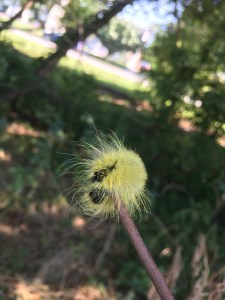
I found this American Dagger Moth caterpillar on a backpack in Mt. Carmel, Pennsylvania. Though the protruding hairs from the green ball of fuzz can be alarming, you have no need to fear of it stinging you. Do take notice, however, that I have him on a stick. While they don’t sting, their hollow locks can break off when touching your skin and will release a nasty toxin.IMG_0850

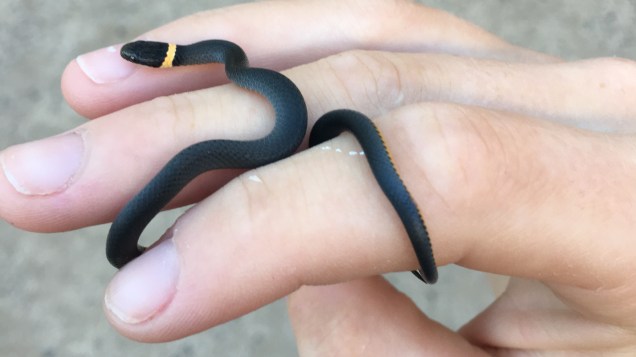
Oddly enough, at the same housing site, I made another companion–a ringneck snake! Ever since I read about these beauties in a herpetology textbook, I’ve been dying to meet one up close, and I must say, I was not disappointed. Spanning up to 15 inches long, Ringnecks carry a docile temperament and make the perfect companions–be it short term or long term.

Exploring the different creatures across the country was definitely one of my favorite aspects of the summer, and I can’t wait to share with you countless of others. Until we meet again, always remember: Whether near or far, learning about nature’s creations will always link back to where you are.

IMG_0943


Happy Morph Day!

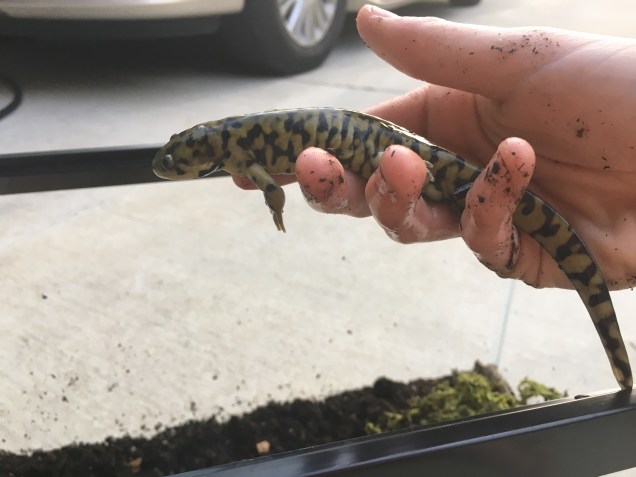
I’ll be the first to admit this post is long overdue. Around Spring break, I figured Milo would complete his change within the week, but I was surprised to watch it undergo another month. That being said, he is now a happy seven-inch salamander!

IMG_8926.JPG

HANDLING SALAMANDERS:

Be sure to have completely moist, clean hands, as lacking to do so can present harmful salts and oils to the salamander; Limit handling to short intervals.

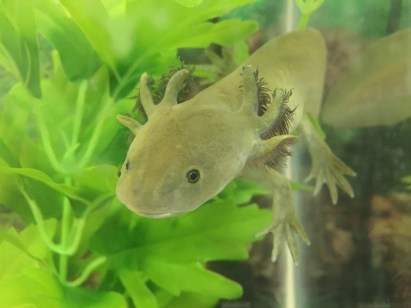
The first noticeable sign of his change was the regression of his gills. Eventually, he began to loom around the surface of the water, so I moved him to a shallower enclosure with a hideout to crawl out on. I will say this was the more tedious part of the transition–not so much the change of environment but waiting for him to fully make the leap from aquatic to terrestrial.

Beginning of Gill Regression

IMG_7370.jpg

Once they do make the switch, it’s best to allow them an enclosure of moist, loose dirt (NO fertilizer) with plants and shaded areas to hide under. As for diet, crickets, mealworms, and earthworms can be let loose in the enclosure for the salamander to feed on as it pleases. The benefit of having mealworms over crickets appears to be centered around Milo residing most of his time underground. This way he is not forced to come up for food and is able to remain under the dirt where he is currently the most comfortable.

He is definitely camera shy in his terrestrial form, but I do hope to have more pictures of his transformation in the weeks to come.

Adopt before you Shop: Easter Bunnies 

Around April, many people decide to purchase bunnies from pet stores as the perfect Easter present. Unfortunately, a majority of unsuspecting new owners end up unable to care for the animal due to a lack of funding or knowledge on fundamental care.

That being said, there are a lot of owners that will end up taking great care of the animal, which then turns the situation into a matter of where to attain one.

An overwhelming amount of rabbits enters shelters each year as unwanted Easter presents in search for another family to love them. Usually, adoption fees are lower than the prices at pet stores, and you can still find the cuddly companion you would at a local shop.

Rabbits can be very affectionate and loyal pets when you put into them the effort and love they deserve. If at first they are shy, don’t worry! They are bound to warm up once they realize you mean them no harm.

This Easter, if you have the ability, please give a bunny a second chance at a home. It may be the best basket you unwrap this year.

In Terms of Care

Aside from a staple diet of pellets, rabbits can also be fed a variety of fresh fruits and vegetables to meet their dietary needs:

Kale and Romaine Lettuce

Carrots

Grapes

Strawberries

Blueberries

Carrots and fruits should be fed in limited amounts or small treat portions due to their high sugar content. For additional required nutrients, feel free to see the care sheet below. This also encompasses housing for the pet, as well as recommended exercise.

Rabbit Care Guide

The Slaying Mantis

crocus-100157_1280You come home from a long day’s work to relax in your garden, only to find yourself swatting at pests that keep multiplying. Not to mention, you’ve begun to notice recurring holes in your plant leaves.
With all the hard work you’ve put in, wouldn’t it be nice to have a form of pest control that you didn’t have to constantly re-apply?

Mantis religiosa, commonly known as the praying mantis, serves as an excellent protector in that it defends plants from invaders while itself requiring little human care/attention.

What’s the benefit?

Mantis religiosa casings typically hatch around 300 eggs, but do not be alarmed at this large value! On average, only around one fifth of the hatchlings survives to reach maturity.

After reaching adulthood, these insects will eat anything they can grasp. Often perceived as slow, mantids are actually voracious hunters and are able to take in their prey within a matter of seconds. Assuming sixty mantises make it to adulthood from the casing, you’re looking at a decent-sized army for your garden.

The average lifespan of a mantis ranges from four to six months. This allows for cases to be let down twice a year, saving you added time for routine pest maintenance. The odds are, however, that the mantises you place originally will breed to form their own cases, causing the initial purchase to turn into a long-term, compounding investment.

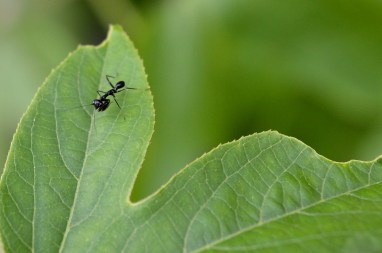
praying-166788_1280  praying-1197615_1280.jpg                                            Common mantis | Common Black Ant

How do you raise them?

When hatching, the mantises will need to be placed in either a hatching net or an enclosure that is large enough to accommodate the soon-to-be nymphs. Due to their small nature, the younglings will need to be fed fruit flies (flightless options are available at minimal cost). When they grow large enough to eat other, larger insects (e.g. ladybugs), they can then be released into your garden to be self-sustaining.

Where do I get them?

Mantid casings can be purchased for as low as $5.00 each from Arbico Organics. In addition, cases can be found from locations such as Amazon and Ace Hardware.

In case you are interested, I have listed a few general items to consider purchasing below:

Egg Cases | Arbico Organics

Egg Cases & Habitat | Amazon

Wingless Fruit Fly Starter Kit | Amazon


Let’s Talk Crested Water Dragons

My friend Terri Napier was generous enough to allow me the use of Reptar, her male dragon for the filming of this video. For that, I send her many thanks!


CHOPPED MIXTURE

Vegetation Bowl/Feeding Area:

Romaine Lettuce

Spinach

Zucchini

Cauliflower & Broccoli

Carrots

Apples & Bananas

Mangos

Insect Bowl/Feeding Area:

Mealworms

Dubia Roaches

Crickets


If you would like the total care guide for these animals, you can
download it from the link below.

CrestedWaterDragonCareGuide.pages


The Problem with Exotic Trading

There is nothing more exciting than walking into a pet store to find a new companion. For the most part, animals in stores come from captive breeders–meaning they can sustain numbers without having to catch more from the wild.

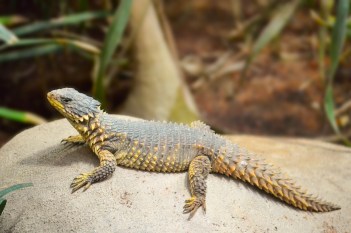
A problem has potential to emerge when the animal under desire can only be wild-caught. Take the Sungazer lizard, for example. Commonly called the Giant Girdled Lizard, these animals are native to Sub-Saharan Africa. sungazer-lizard-1647399_1280.jpg
Popular for their dragon-like appearance, these animals quickly became popular in the exotic pet trade. Unfortunately, these animals do not perform well during captive breeding, and because of this, they must be caught individually.

The increased desire for Sungazers quickly caused numbers to dwindle, and without regulations on their species, these girdled lizards now face extinction. Since then, methods have been set in place, pulling these animals from the exotic pet trade in order to raise their population numbers.

What’s happening with these lizards isn’t uncommon in other species as well, another being Ontario’s Spotted Turtle.

While regulations can be set in place after the fact to protect numbers, it seems logical to have a scale in place to limit overexploitation from the start. The World Wildlife Foundation (WWF) strives to halt illegal pet trade, while encouraging legal numbers coming from the wild to be reduced–as to not harm the individual species.

With the pet trade increasing, the need for further regulations follows in parallel. From WWF’s viewpoint:

“Historically, such overexploitation has caused extinctions or severely threatened species and, as human populations have expanded, demand for wildlife has only increased.”

Hopefully, a stronger desire for conserving these species numbers in the wild will catch hold, and animals like the Sungazer Lizard will no longer dwindle due to a growing industry.

What’s your opinion?


Munchin’ Mice

vegetables-790022_640.jpg

When from a reputable manufacturer, commercialized diets for mice offer a great deal of protein and additional nutrients. A lot of the time, however, fillers are used–such as corn–which can limit the daily nutrients your pet needs to be healthy.

One way of getting around this is making your own chops for your pet. When creating your own mixture, it is important to remember mice need plenty of fruits and vegetables in their diet as well as protein. In order to create the best chop possible for your mouse, here are a few possible vegetable options:

broccoli-1078163_640.jpg

Romaine Lettuce

Kale

Cabbage

Spinach

Bean Sprouts

Carrots

Zucchini

Broccoli

Protein can be introduced in a variety of ways. Lean cut turkey, shelled beans, as well as insects are all perfect options to include into your mouse’s diet. When selecting an insect, it is best to choose a size appropriate to your pet, so they do not face the risk of biting off more than they can chew. I would personally choose small mealworms and Dubia roaches. 

After introducing vegetables and protein, it is nice to leave your mouse with carbohydrates in the form of fruit. Listed below are a few options suitable for your pet’s mixture:

Keep in mind, it is crucial to skin the fruit before giving it to your mice in order to reduce the risk of impaction!

berries-1546125_1280.jpgStrawberries

Blackberries & Raspberries

Grapes 

Tomatoes

Apples & Bananas

The lists I have provided certainly aren’t the only foods you can feed your mouse, just some of my suggestions. If you have any questions about foods you are using or are wanting information on chops for other species, feel free to shoot me an email and I will be glad to help!


Eye of the Tiger: Caring for My Eastern Tiger Salamander Larva

Earlier in the semester, I stumbled across an Eastern tiger salamander at Petco, still in his waterdog form. This type of salamander is known for its hardiness compared to other salamander breeds.

My little guy’s name is Milo, though he hasn’t stayed little for long.  Spanning a length of 140 mm, he is an ideal size for metamorphosis. While docile to humans, I would hate to be an insect crossing his path.

IMG_6793.JPG

No one is certain what causes these water dogs to initiate their change. Speculations range from their fear of a shifting external environment to simply random initiation. I have seen owners induce the transformation in the past by removing a filter and gradually lowering water levels; coupled with increased time between feedings, this can cause the water dogs to morph into their terrestrial form.

Diet for these animals consists of insects, freeze dried krill, as well as pinky mice. The latter, as well as some variations of insects, must be given in moderation due to the tiger salamander’s increased risk for obesity. Milo’s diet currently consists of 4 freeze-dried krill a day, with a mealworm every other day.

IMG_6796.JPG

I choose to feed him with feeder tongs, just to ensure his quantities remain consistent. Dropping food in by hand or dangling is perfectly suitable, though sometimes they will mistake your finger for a nibble. That being said, because they lack teeth it will just feel like a rubber ball bouncing off your fingertip.

I have my water dog housed in a three-gallon aquarium right now and am hoping to move him to a new ten-gallon tank in the upcoming week.

Look out for an update post featuring Milo’s new enclosure as well as any growth progress made!